AI-Driven Sales Strategies
B2B Lead Gen Agency vs. In-House Teams: Pros, Cons, and Tech Impact
The Regie Team
|
Jun 28, 2026

Introduction
Businesses are stuck choosing between outsourcing lead generation or building in-house teams, but neither option guarantees success. Both options come with their own set of challenges that can hinder effective lead generation. Understanding these challenges is crucial for companies looking to optimize their lead generation efforts. Without a clear strategy, companies risk falling behind in a competitive market.
Define B2B Lead Generation Agencies and In-House Teams
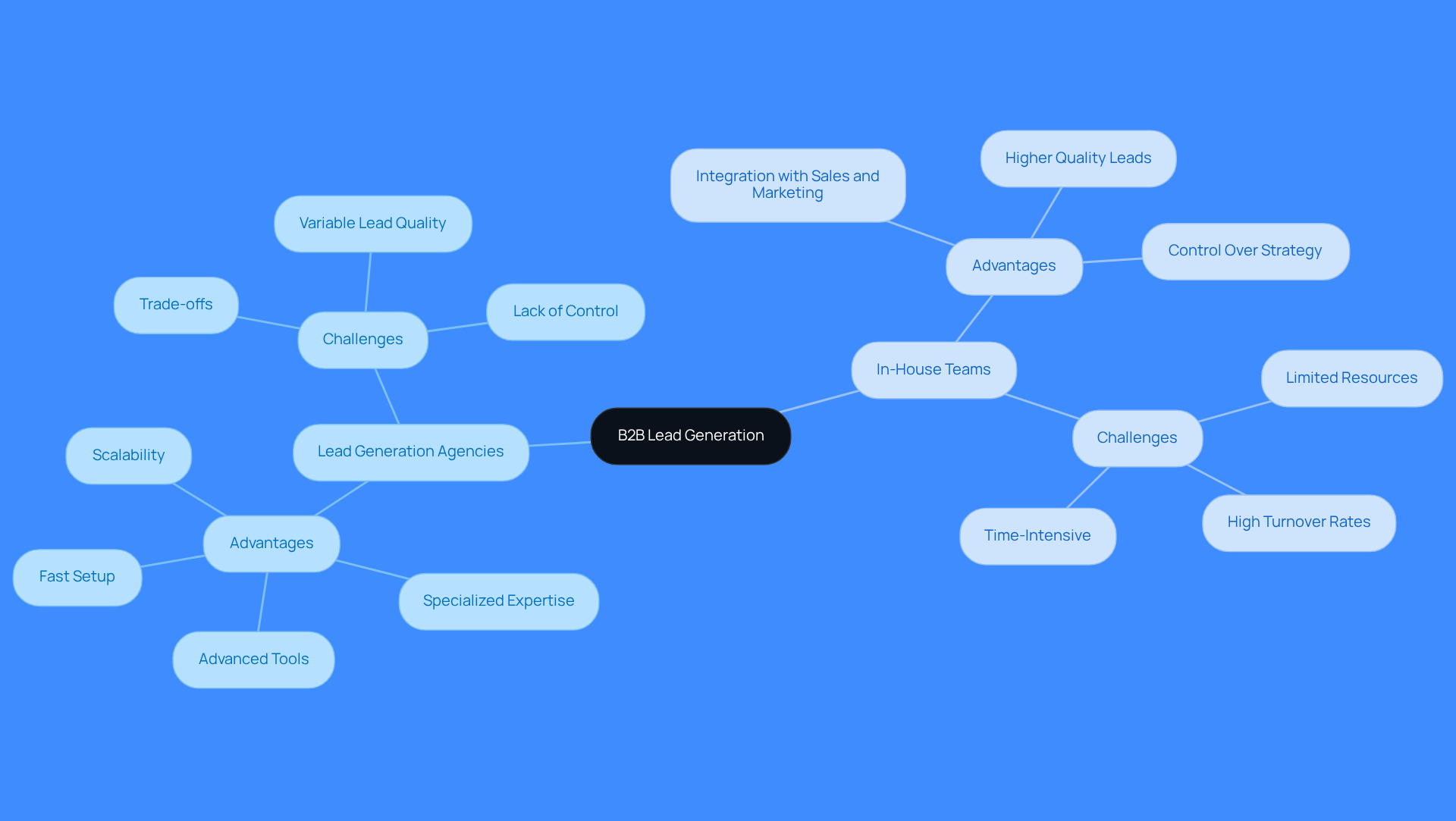
A B2B lead gen agency streamlines the process of acquiring business customers, but it comes with trade-offs that companies must weigh carefully. They leverage advanced tools and specialized expertise to quickly scale operations and respond to market shifts. Internal teams focus on lead generation as part of broader sales and marketing efforts, but they face unique challenges. Yet, they often struggle with limited resources and expertise compared to specialized agencies. Evaluating these models helps companies align their client acquisition strategies with their specific needs and market dynamics.
Evaluate Pros and Cons of Agencies vs. In-House Teams
When comparing a B2B lead gen agency to in-house teams, operational efficiency and cost-effectiveness are at stake.
Agencies:
-
Pros:
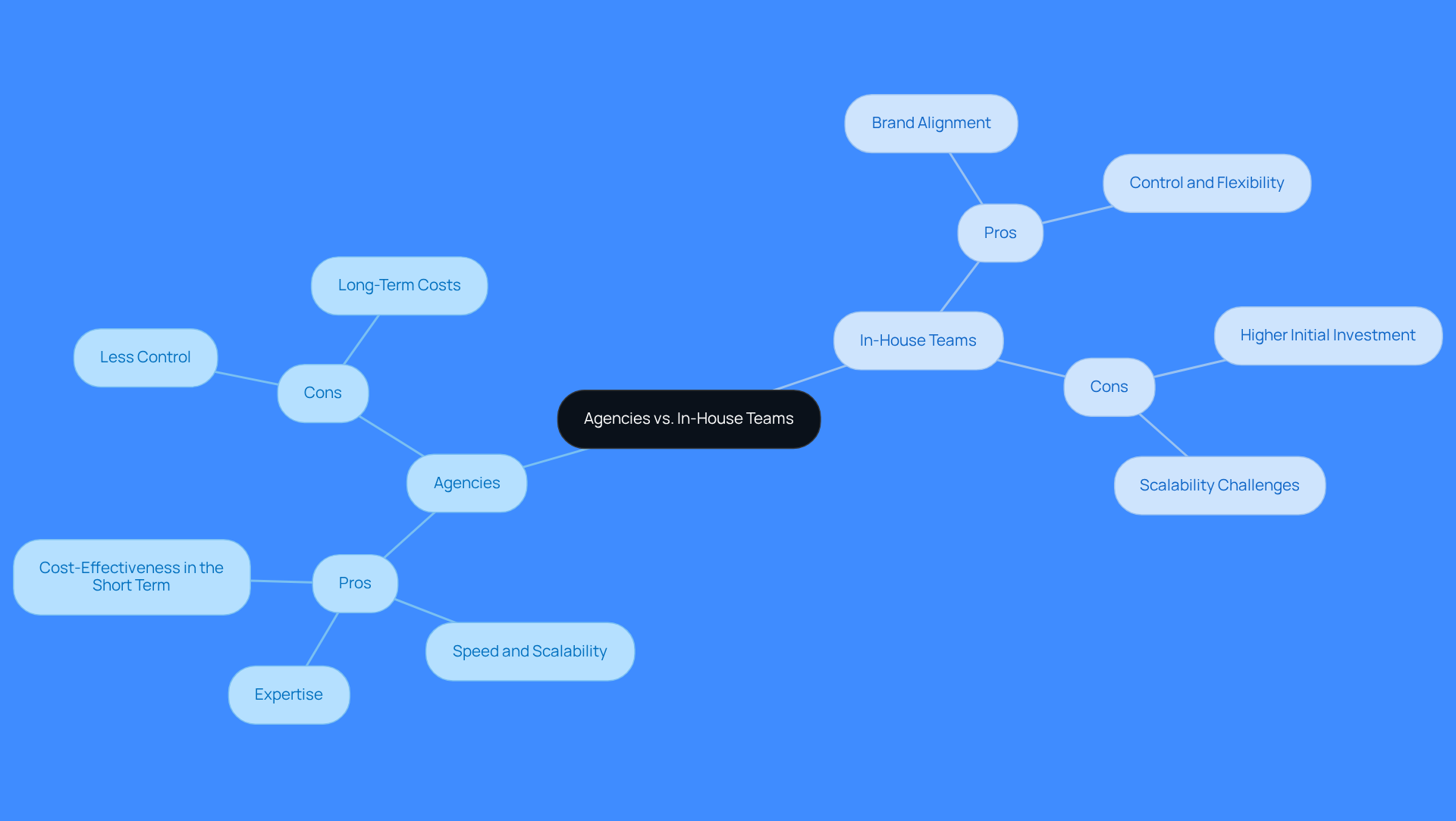
- Speed and Scalability: Agencies scale lead generation quickly, launching campaigns in just weeks. Their established resources enable efficient management of large quantities.
- Expertise: A B2B lead gen agency typically employs specialists skilled in marketing, data analysis, and sales, providing a wealth of knowledge that enhances campaign effectiveness.
- Cost-Effectiveness in the Short Term: Initially, outsourcing to an agency can be more economical than hiring and training an internal group, allowing for immediate resource allocation.
Cons:
- Less Control: Companies may experience limited oversight of the agency's operations and strategies, leading to misalignment with brand messaging and objectives.
- Long-Term Costs: While agencies may appear cheaper at first, ongoing costs can accumulate, potentially surpassing the expenses of maintaining an internal team.
In-House Teams:
-
Pros:
- Brand Alignment: In-house teams understand the company’s culture and products intimately, enabling more tailored and effective outreach strategies.
- Control and Flexibility: Companies maintain direct control over their lead generation strategies, allowing for quick pivots based on internal feedback and market changes.
Cons:
- Higher Initial Investment: Establishing an in-house team necessitates significant investment in hiring, training, and technology, which can strain budgets.
- Scalability Challenges: Internal groups may encounter difficulties in scaling operations swiftly, particularly during peak demand periods, which can hinder responsiveness.
Understanding these dynamics is crucial for aligning lead generation strategies with evolving market demands.
Determine Selection Criteria for Your Business Needs
Choosing between a B2B lead generation agency and an in-house team hinges on critical operational factors:
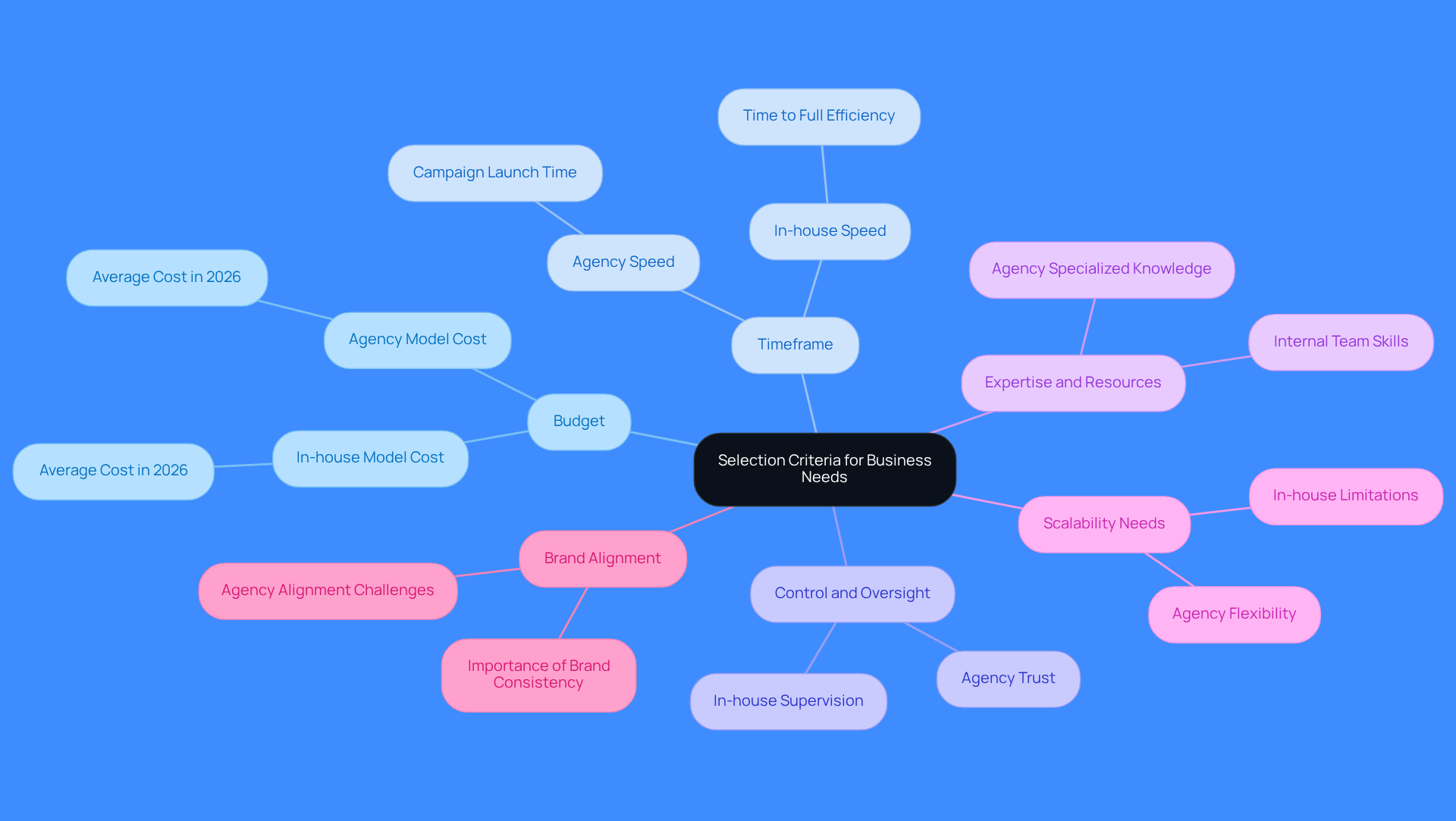
- Budget: Analyze the total cost of ownership for both models, factoring in initial setup, ongoing operational expenses, and any potential hidden fees. In 2026, an internal model costs about $276K per year, while an agency averages $96K.
- Timeframe: Evaluate how swiftly prospects are needed. A B2B lead gen agency typically delivers quicker outcomes, often initiating and enhancing campaigns within 4 to 6 weeks, whereas internal groups may take 6 to 12 months to reach full effectiveness.
- Control and Oversight: How much control do you want over lead generation? In-house groups offer direct supervision, which can be vital for preserving brand consistency, while agencies may require a level of trust in their expertise.
- Expertise and Resources: What skills does your team currently have? If the internal group lacks specific experience, a B2B lead gen agency can offer the necessary expertise and specialized knowledge, particularly in areas requiring advanced strategy or technical execution.
- Scalability Needs: Consider the potential for growth and whether the selected model can scale effectively to meet future demands. B2B lead gen agencies often excel in this area, enabling quick adjustments to campaign scale based on business needs.
- Brand Alignment: Consider the significance of brand messaging and culture in the client acquisition process. In-house groups may be better suited for companies that prioritize brand consistency and require close alignment with internal stakeholders.
A strategic evaluation of these criteria can significantly enhance prospect acquisition efficiency and align with business objectives.
Assess the Role of Technology in Lead Generation
Technology is reshaping how B2B agencies and internal teams acquire prospects, but many still struggle with outdated workflows and fragmented tech stacks.
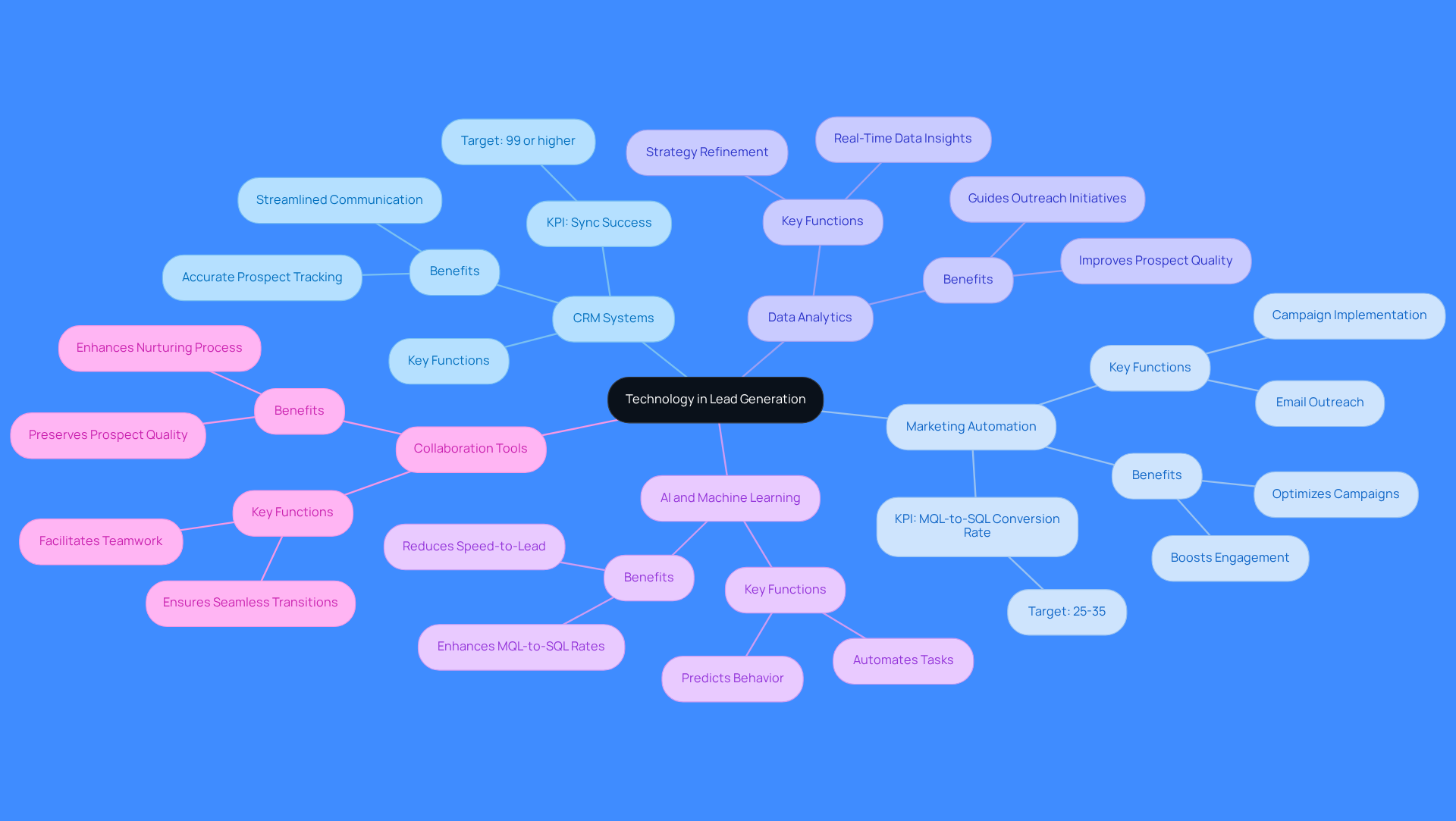
- CRM Systems: Customer Relationship Management (CRM) systems are essential for tracking interactions with potential clients, managing data, and streamlining communication. Target a sync success KPI of 99% or higher for accurate prospect tracking and closed-loop attribution, essential for proving campaign impact.
- Marketing Automation: Automation tools allow companies to implement campaigns on a large scale, handle email outreach, and cultivate prospects through tailored content. Agencies leverage advanced marketing automation platforms to optimize campaigns, while in-house teams enhance their efficiency. Marketing automation platforms (MAPs) can initiate automatic nurture email sequences based on prospect behavior, boosting engagement and conversion rates.
- Data Analytics: Data-driven insights are crucial for understanding prospect behavior and preferences. Agencies typically access sophisticated analytics tools that refine strategies based on real-time data. Internal groups can also leverage analytics to guide outreach initiatives, ensuring focus on high-quality prospects and improving overall prospect quality.
- AI and Machine Learning: AI technologies enhance prospect acquisition by automating tasks, personalizing outreach, and predicting behavior. Both organizations and internal groups can utilize AI to improve effectiveness and efficiency in prospect generation. For instance, AI systems can reduce speed-to-lead from hours to seconds, significantly improving MQL-to-SQL conversion rates when combined with multi-signal intent data.
- Collaboration Tools: Effective communication and collaboration tools are crucial for both models, ensuring seamless teamwork, whether in-house or outsourced. These tools enable smoother transitions between sales and marketing teams, essential for preserving prospect quality and enhancing the nurturing process.
Embracing these technologies not only streamlines operations but also drives measurable improvements in prospect acquisition outcomes.
Conclusion
Deciding between a B2B lead generation agency and an in-house team reveals operational challenges that can impact client acquisition strategies. Each model has unique advantages and challenges that require careful assessment of your operational needs. Understanding both approaches helps align lead generation with sales and marketing goals.
Key factors like speed, scalability, and expertise differentiate agencies from in-house teams:
- Agencies deploy quickly with specialized knowledge.
- In-house teams ensure control and brand consistency.
Technology, including CRM systems and AI, is crucial for optimizing lead generation effectiveness. The choice should be based on a clear evaluation of budget, control, expertise, and scalability. The right model, backed by technology, enhances prospect acquisition and market presence. Assess your unique circumstances to make informed decisions that drive growth in B2B lead generation.
Frequently Asked Questions
What is a B2B lead generation agency?
A B2B lead generation agency is a specialized service that streamlines the process of acquiring business customers by leveraging advanced tools and expertise to quickly scale operations and respond to market changes.
What are the advantages of using a B2B lead generation agency?
The advantages include access to specialized expertise, advanced tools, and the ability to rapidly scale lead generation efforts in response to market shifts.
What challenges do in-house lead generation teams face?
In-house teams often struggle with limited resources and expertise compared to specialized agencies, which can hinder their effectiveness in lead generation.
How do B2B lead generation agencies and in-house teams differ?
B2B lead generation agencies focus solely on lead acquisition using specialized tools and expertise, while in-house teams integrate lead generation into broader sales and marketing efforts, facing unique challenges in resources and expertise.
Why is it important for companies to evaluate their lead generation models?
Evaluating lead generation models helps companies align their client acquisition strategies with their specific needs and market dynamics, ensuring they choose the most effective approach for their goals.
List of Sources
- Define B2B Lead Generation Agencies and In-House Teams
- In-house & Outsourced Lead Generation | Callbox (https://callboxinc.com/lead-generation/in-house-and-outsourced-lead-generation)
- Lead Generation Agency vs. In-House Lead Generation (https://leadfeeder.com/blog/comparisons/lead-generation-agency-vs-in-house-lead-generation)
- Demand Gen Report - The Latest B2B Marketing News & Trends (https://demandgenreport.com)
- B2B Lead Generation: Outsourcing vs. In-House (https://saleshive.com/blog/b2b-lead-generation-outsourcing-vs-in-house)
- In-House vs Outsourced Lead Generation (2026): Honest Cost and ROI Comparison (https://touchstonebpo.com/blog/in-house-vs-outsourced-lead-generation)
- Evaluate Pros and Cons of Agencies vs. In-House Teams
- 10 Best Lead Generation Companies for B2B Growth in 2026 (https://martechcube.com/10-best-lead-generation-companies)
- B2B Lead Generation Report 2026 (https://dux-soup.com/blog/b2b-lead-generation-report-2026)
- Lead Generation Statistics 2026: Benchmarks & Trends (https://martal.ca/lead-generation-statistics-lb)
- Top 15 B2B Demand Generation Agencies to Hire in 2026 (https://salesbread.com/b2b-demand-generation-agencies)
- B2B Lead Generation Companies: What Works in 2026 | Lead Gen Jay (https://leadgenjay.com/blog/best-b2b-lead-generation-companies-what-actually-works-in-2026)
- Determine Selection Criteria for Your Business Needs
- B2B Lead Generation Statistics – First Page Sage (https://firstpagesage.com/reports/b2b-lead-generation-statistics-fc)
- Lead Generation Statistics 2026: 80+ B2B Benchmarks That Drive Pipeline (https://callboxinc.com/growth-hacking/b2b-lead-generation-statistics)
- In House vs Agency Marketing: Which Wins? — MorresPeck (https://morrespeck.com/blog/in-house-vs-agency-marketing-which-wins)
- In-house or agency? A smarter way to decide in 2026 (https://linkedin.com/pulse/in-house-agency-smarter-way-decide-2026-chloë-mckenna-urile)
- Digital Marketing Agency vs In-House: What Wins? (https://eraskytechnologies.com/blog/in-house-marketing-vs-agency-which-is-better-for-your-business-in-2026)
- Assess the Role of Technology in Lead Generation
- Top 4 B2B Lead Generation Tools to Grow Your Pipeline in 2026 - Directive (https://directiveconsulting.com/blog/top-4-b2b-lead-generation-tools-to-grow-your-pipeline-in-2026)
- The Future of Lead Generation: 6 Trends to Watch in 2026 (https://theedigital.com/blog/lead-generation-trends)
- Lead Generation Statistics 2026: Benchmarks & Trends (https://martal.ca/lead-generation-statistics-lb)
- Lead Generation Statistics for 2026: Key Marketing Data (https://learn.g2.com/lead-generation-statistics)
- Whats new in B2B lead generation in 2026? (https://linkedin.com/pulse/whats-new-b2b-lead-generation-2026-jetaa7-ecjhf)