AI-Driven Sales Strategies
Best Practices for Optimizing Outbound Sales Software Implementation
The Regie Team
|
Mar 1, 2026


Introduction
Navigating the complexities of outbound sales software implementation can significantly impact an organization’s success. Misalignment between software selection and business goals often leads to stagnation. Companies must ensure their tools address immediate needs while fostering long-term growth. The real challenge lies in overcoming operational friction - how can businesses effectively leverage these technologies to enhance performance and ROI?
Fragmented tech stacks and outdated workflows create inefficiencies that hinder sales processes. Regie offers a smarter infrastructure shift, consolidating tools and streamlining operations. This isn’t just about adding another tool; it’s about transforming how sales teams operate. By focusing on measurable impacts, organizations can drive pipeline performance and operational efficiency.
Align Software Selection with Organizational Goals
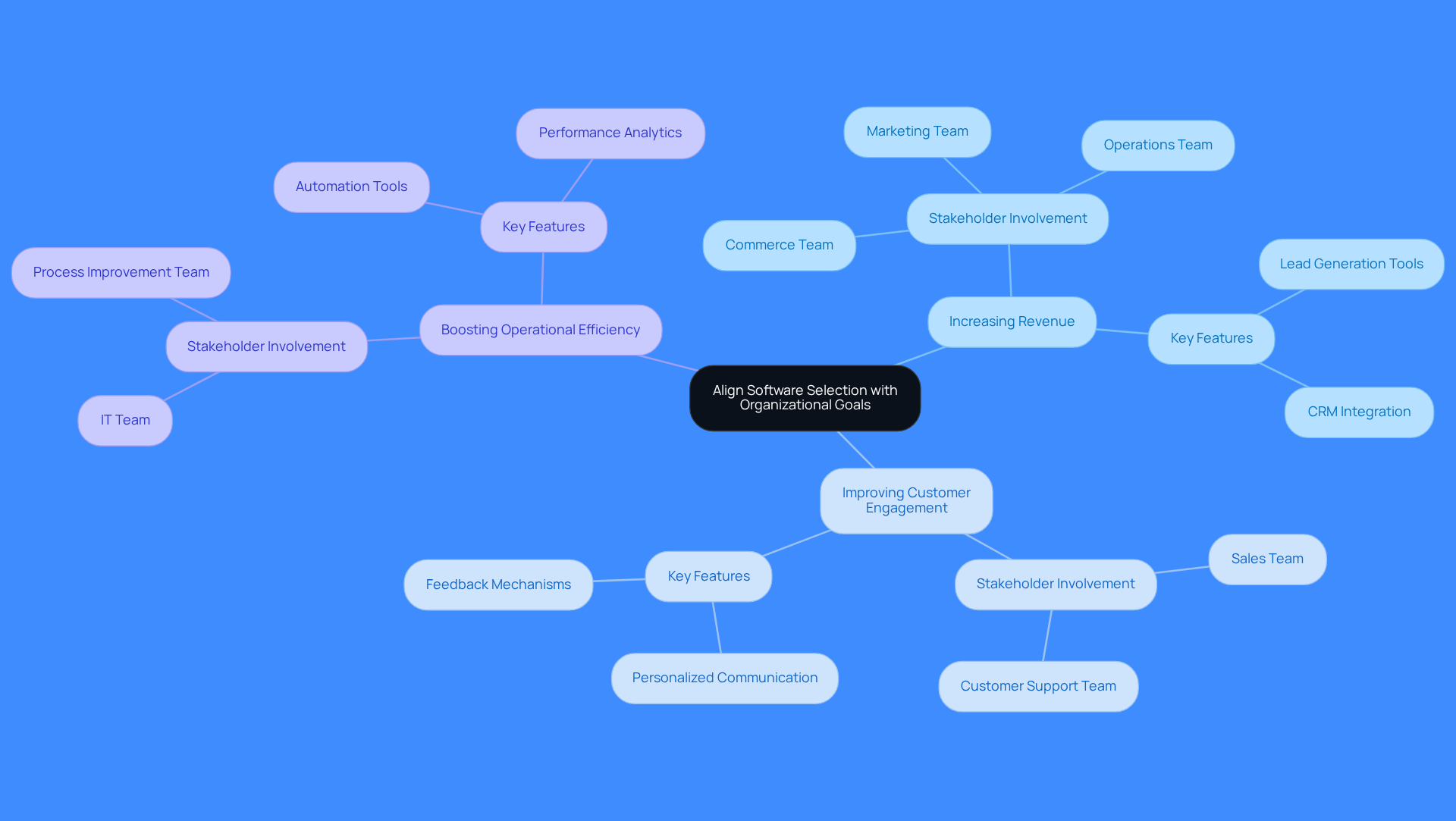
To enhance the effectiveness of outbound sales, aligning the selection process with your organization’s broader objectives is crucial. Begin by analyzing your business goals, such as:
- Increasing revenue
- Boosting customer engagement
Involve key stakeholders from commerce, marketing, and operations to gather diverse insights on essential features and functionalities. For example, if integration is a priority, focus on solutions that provide robust and seamless integration with existing CRM systems. This strategic alignment ensures that the application meets the specific needs of your sales team, facilitating easier adoption and optimizing performance.
As Daniel Pink notes, understanding the timing and context of your marketing efforts can significantly enhance effectiveness, making it vital to choose tools that support these objectives.
Establish a Structured Implementation Plan
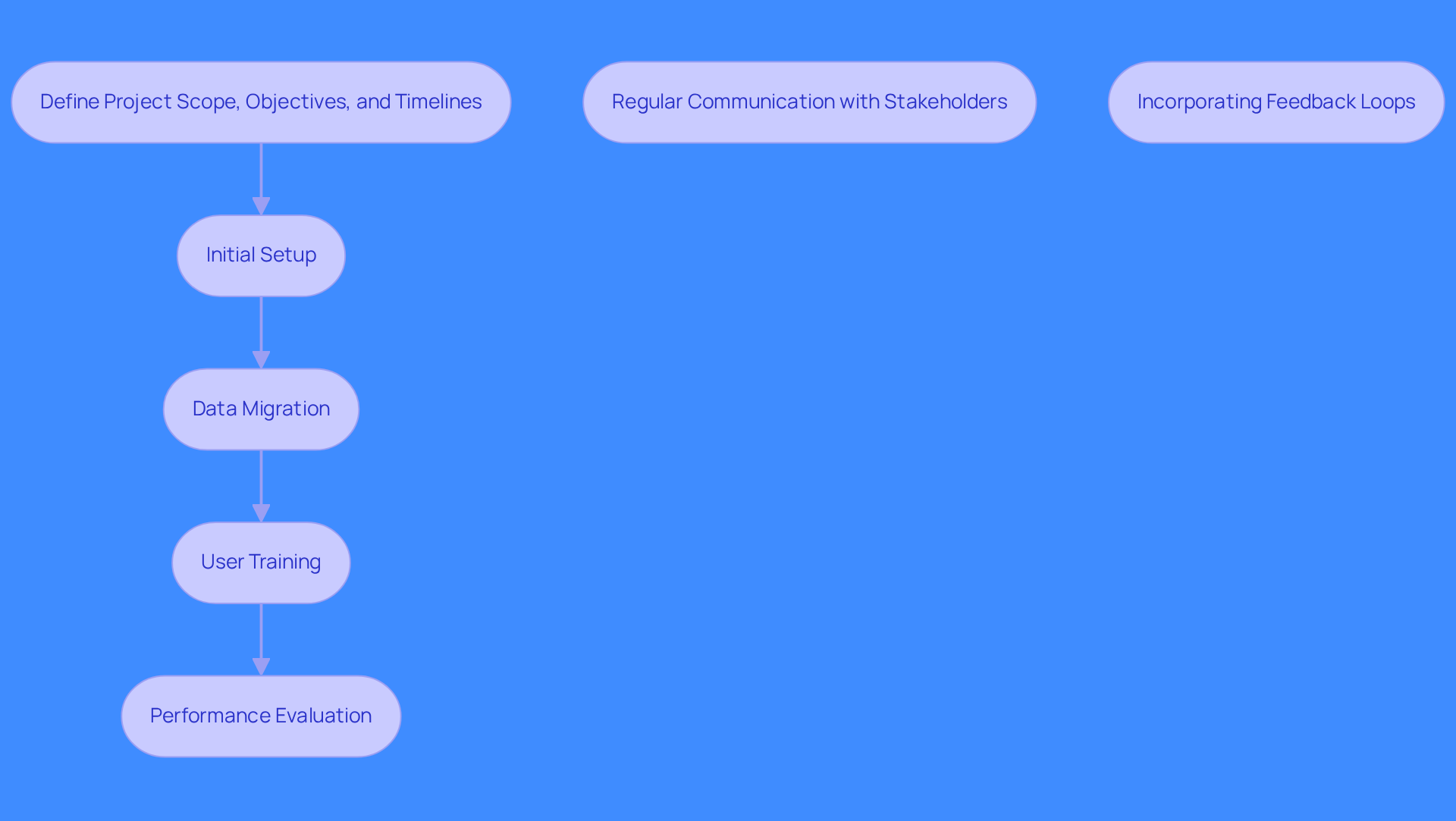
A structured implementation strategy is crucial for effectively deploying outbound sales software. Begin by defining the project scope, objectives, and timelines. Identify key milestones and assign responsibilities to team members to ensure accountability. For example, when executing the software, outline specific phases like:
- Initial setup
- Data migration
The software solution from this company can significantly reduce the workload, allowing them to focus on selling rather than researching leads and drafting personalized messages. Regular communication with stakeholders is essential to keep them informed of progress and address concerns promptly. Incorporating feedback loops can also refine the implementation process based on user experiences and challenges faced during rollout.
Statistics show that companies leveraging outbound sales software are 83% more likely to meet or exceed revenue objectives, underscoring the importance of a structured implementation plan. As Peter F. Drucker noted, 'Unless commitment is made, there are only promises and hopes; but no plans.' This emphasizes the need for commitment in planning. Additionally, be mindful of obstacles like poor communication, which can impede success. By addressing these challenges and adopting a systematic approach, organizations can enhance the efficiency of their sales processes, leveraging advanced technology to improve engagement and optimize resource use.
Provide Comprehensive Training and Ongoing Support
To ensure your sales team effectively leverages the software, particularly the mentioned platform, training sessions are crucial. Start with a focused training session that covers the software's functionalities, best practices, and its integration into existing workflows. Emphasize the automation features, which significantly reduce time spent on manual tasks. For example, Miguel D., an Account Executive, remarked, "What used to take me 15-20 minutes of manual work... now takes me mere minutes and creates much more relevant and compelling, customized messages."
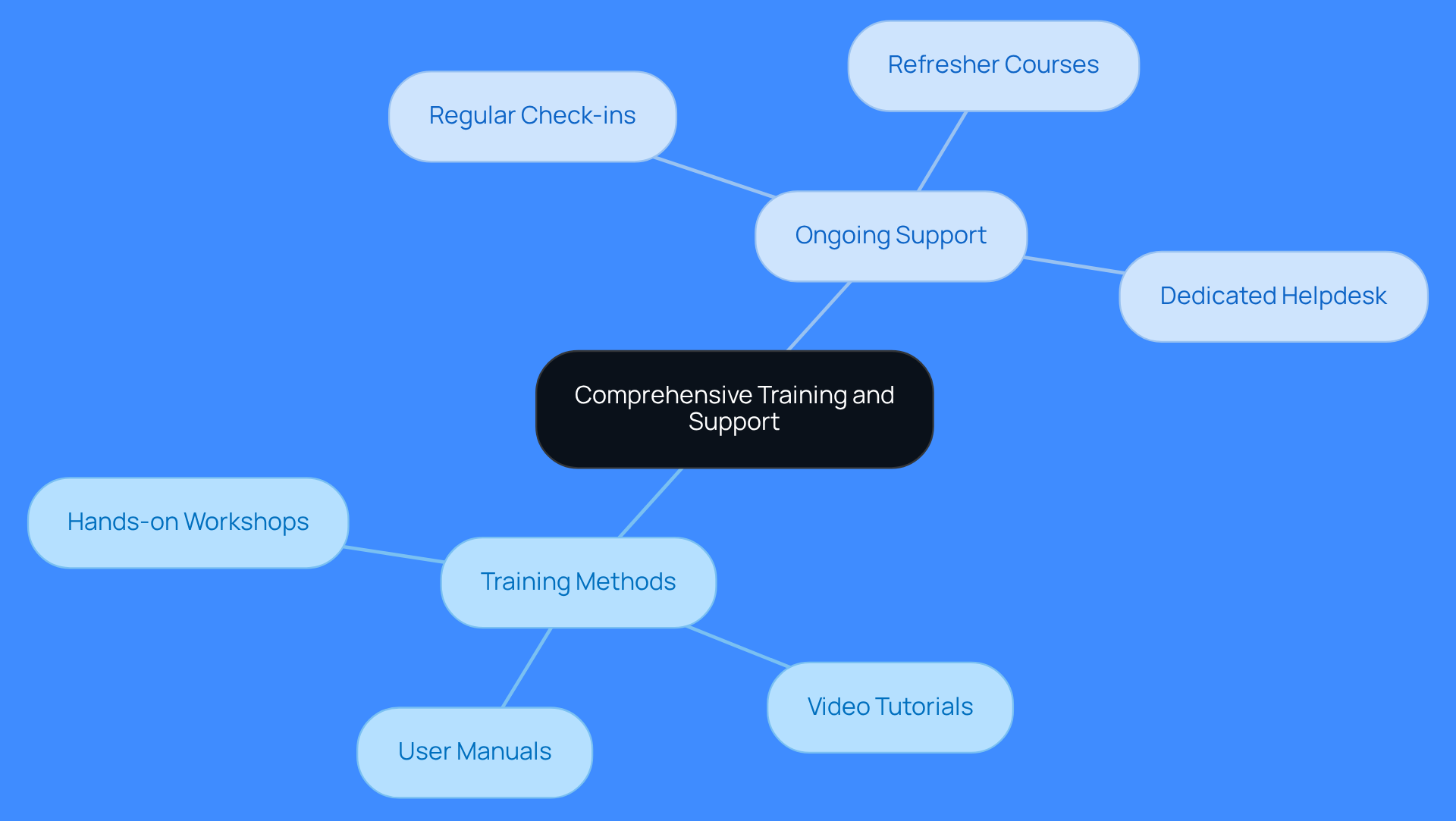
Use a blend of training methods, including:
- Hands-on workshops
- Video tutorials
- User manuals
After the training sessions, establish a robust support system with:
- Regular check-ins
- Refresher courses
- A dedicated helpdesk for troubleshooting
Arnaud L., a Business Development Lead, noted, "The results are remarkable - tasks are now handled seamlessly by the AI." Encourage feedback to continuously improve the training program and address knowledge gaps, ensuring your team fully harnesses the potential of automation and personalization features.
Implement Continuous Evaluation and Optimization Strategies
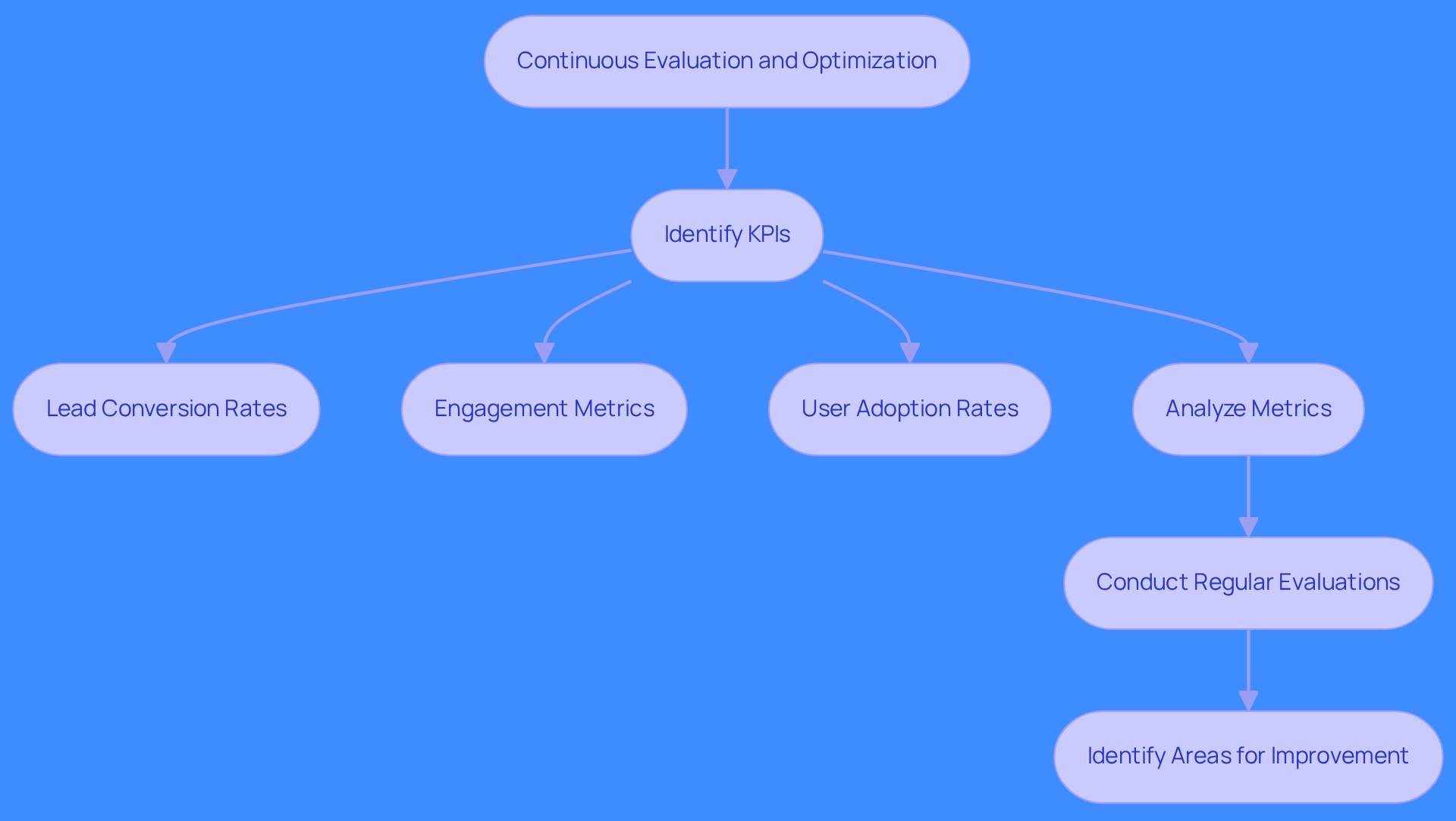
To ensure the ongoing efficiency of your sales software, particularly with solutions like CRM systems, continuous assessment and enhancement strategies are crucial. Start by identifying key performance indicators (KPIs) that align with your revenue goals, such as:
- User adoption rates
Regularly analyze these metrics to identify areas for improvement. For example, a drop in engagement rates may indicate a need to refine your outreach strategies or messaging.
Conduct regular evaluations of the application's features and capabilities to ensure they meet the evolving needs of your sales team. Foster a culture of feedback where team members can share insights and suggestions for enhancements, promoting an environment of collaboration.
Research indicates that organizations effectively integrating AI into their revenue processes see a significant increase in productivity, highlighting the importance of optimizing applications for maximum performance. Furthermore, leading platforms achieve over 95% intent recognition accuracy, significantly boosting sales conversions. By concentrating on these metrics and adopting a proactive approach to software optimization, businesses can achieve better outcomes and enhance overall efficiency.
Conclusion
Aligning outbound sales software implementation with organizational goals is crucial for maximizing efficiency and achieving tangible results. Selecting tools that align with business objectives, establishing a structured implementation plan, providing thorough training, and committing to continuous evaluation can significantly enhance sales processes and overall performance.
Key strategies include:
- Involving stakeholders in the software selection process to ensure the tools meet specific needs.
- Creating a clear implementation roadmap that defines responsibilities and timelines.
- Fostering a culture of ongoing support and feedback.
Additionally, leveraging advanced technology and AI capabilities can streamline operations and improve engagement, leading to increased revenue and greater customer satisfaction.
Organizations must prioritize a strategic approach to outbound sales software implementation. By focusing on thorough planning, effective training, and continuous optimization, sales teams can adapt to evolving market demands, fully utilize their software, and drive sustainable growth. These steps not only improve sales outcomes but also position companies to excel in a competitive landscape.
Frequently Asked Questions
Why is it important to align software selection with organizational goals?
Aligning software selection with organizational goals enhances the effectiveness of external sales tools and ensures that the chosen applications meet the specific needs of the sales team.
What business goals should be analyzed when selecting software?
Key business goals to analyze include increasing revenue, improving customer engagement, and boosting operational efficiency.
Who should be involved in the software selection process?
Key stakeholders from commerce, marketing, and operations should be involved to gather diverse insights on essential features and functionalities.
What should be prioritized if lead generation is a key focus?
If lead generation is a priority, solutions that provide strong prospecting tools and seamless integration with existing CRM systems should be prioritized.
How does strategic alignment impact software adoption and return on investment?
Strategic alignment ensures that the application meets the specific needs of the sales team, facilitating easier adoption and optimizing return on investment.
What does Daniel Pink suggest about marketing efforts in relation to software selection?
Daniel Pink notes that understanding the timing and context of marketing efforts can significantly enhance effectiveness, making it vital to choose tools that support these objectives.
List of Sources
- Align Software Selection with Organizational Goals
- revenue.io (https://revenue.io/blog/motivational-sales-quotes-from-revenue-and-top-industry-leaders)
- pipeline.zoominfo.com (https://pipeline.zoominfo.com/sales/outbound-sales-software)
- vonage.com (https://vonage.com/resources/articles/20-sales-quotes-mean-team)
- salesforce.com (https://salesforce.com/blog/famous-motivational-quotes)
- 140+ Sales Statistics | 2026 Update - SPOTIO (https://spotio.com/blog/sales-statistics)
- Establish a Structured Implementation Plan
- 45 Sales Statistics Every Team Should Know in 2026 (https://flowlu.com/blog/productivity/sales-statistics)
- salesforce.com (https://salesforce.com/blog/famous-motivational-quotes)
- nutshell.com (https://nutshell.com/blog/crm-stats)
- 34 of the Best Planning Quotes (https://projectmanager.com/blog/planning-quotes)
- pipelinecrm.com (https://pipelinecrm.com/blog/9-crm-statistics-that-matter-for-sales-teams)
- Provide Comprehensive Training and Ongoing Support
- 40 Sales Training Statistics to Boost Performance (2025) (https://federicopresicci.com/blog/sales-training/sales-training-statistics)
- hyperbound.ai (https://hyperbound.ai/blog/sales-training-statistics)
- salesforce.com (https://salesforce.com/blog/famous-motivational-quotes)
- Sales Training Statistics: USA 2026 | The Sales Collective (https://thesalescollective.com/sales-training-statistics-usa)
- Implement Continuous Evaluation and Optimization Strategies
- dailybot.com (https://dailybot.com/insights/best-outbound-sales-kpis-to-keep-track-of)
- retellai.com (https://retellai.com/blog/the-8-kpis-every-ai-outbound-calling-strategy-should-track)
- vonage.com (https://vonage.com/resources/articles/20-sales-quotes-mean-team)