Lead Management and CRM
Prospect vs Lead: Key Differences Driving Sales Success
The Regie Team
|
Mar 11, 2026
Introduction
Understanding the differences between prospects and leads is crucial for sales organizations looking to boost conversion rates and drive revenue. Both represent potential customers, but their level of engagement and qualification varies, impacting sales strategies significantly.
How can businesses navigate this landscape to optimize outreach and build strong relationships? This article examines the key distinctions between prospects and leads, outlining strategies that can turn initial interest into loyal customers while maximizing sales effectiveness.
Define Prospect and Lead: Key Distinctions in Sales Terminology
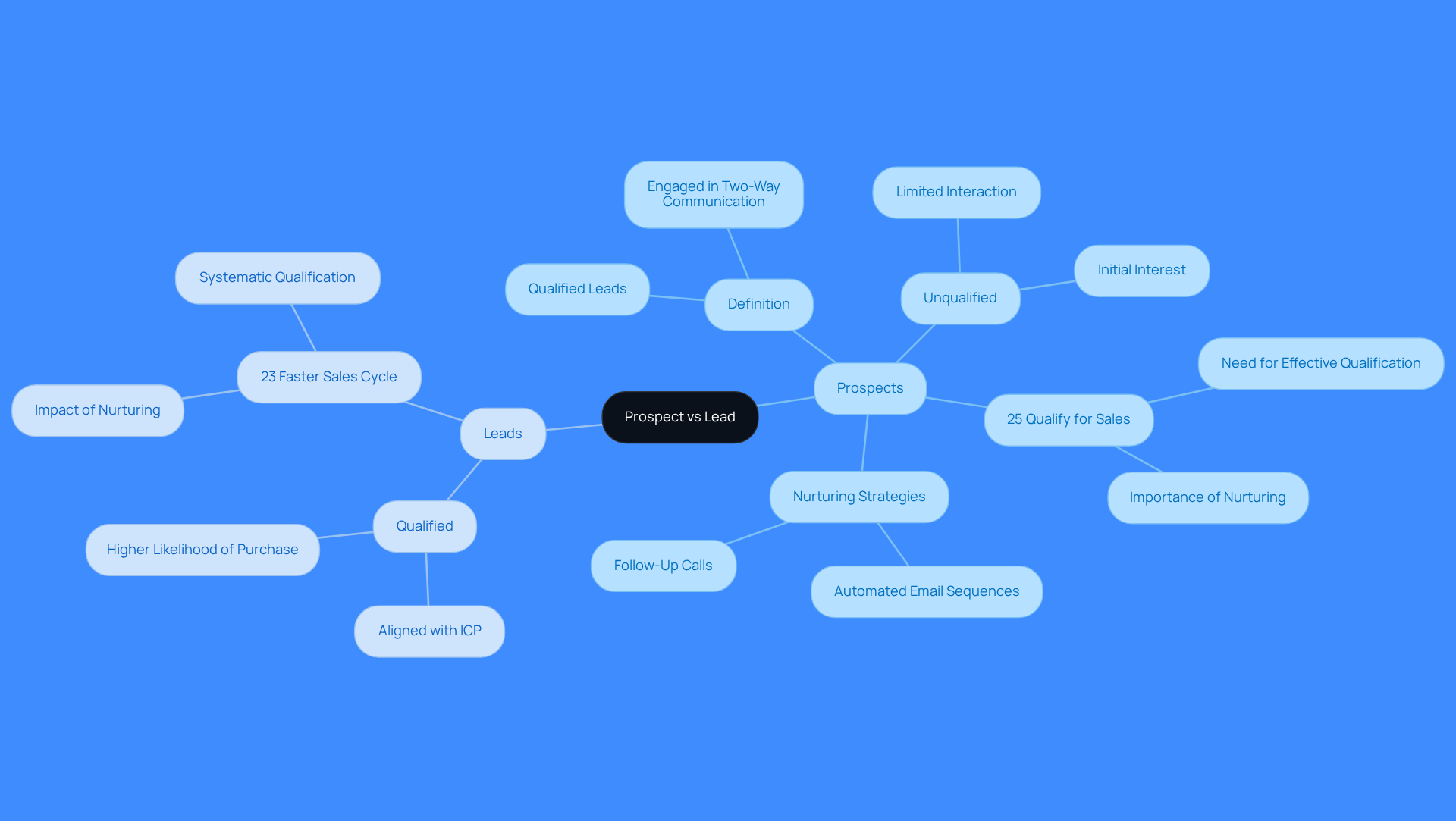
In the realm of commerce, understanding the differences is important, as a prospect is someone who has expressed interest in a company's offerings, often by filling out a contact form or downloading a resource. However, when considering prospect vs lead, these prospects are usually unqualified, as they haven't been assessed against specific criteria that indicate their potential to become paying clients. Statistics show that only 25% of marketing prospects qualify for direct sales engagement, underscoring the need for effective strategies.
Conversely, the distinction between a prospect and a lead is that the former aligns with the ideal customer profile (ICP) and shows a higher likelihood of making a purchase. These prospects engage in two-way communication with sales representatives, signaling their readiness to explore solutions further. This distinction is vital; organizations that implement systematic nurturing strategies can see prospects move through the sales funnel 23% faster. By 2026, understanding these differences will be crucial for refining marketing strategies, as only 13% of leads convert. By focusing on the nuances of prospect vs lead, businesses can tailor their outreach efforts, ultimately enhancing conversion rates and driving revenue growth.
Regie.ai's tools and features allow teams to automate outreach, ensuring they connect with the right contacts at the right time with personalized messaging. This streamlines the sales process and maintains CRM integrity with clean, synchronized data.
Examine Roles: How Prospects and Leads Drive Sales Success
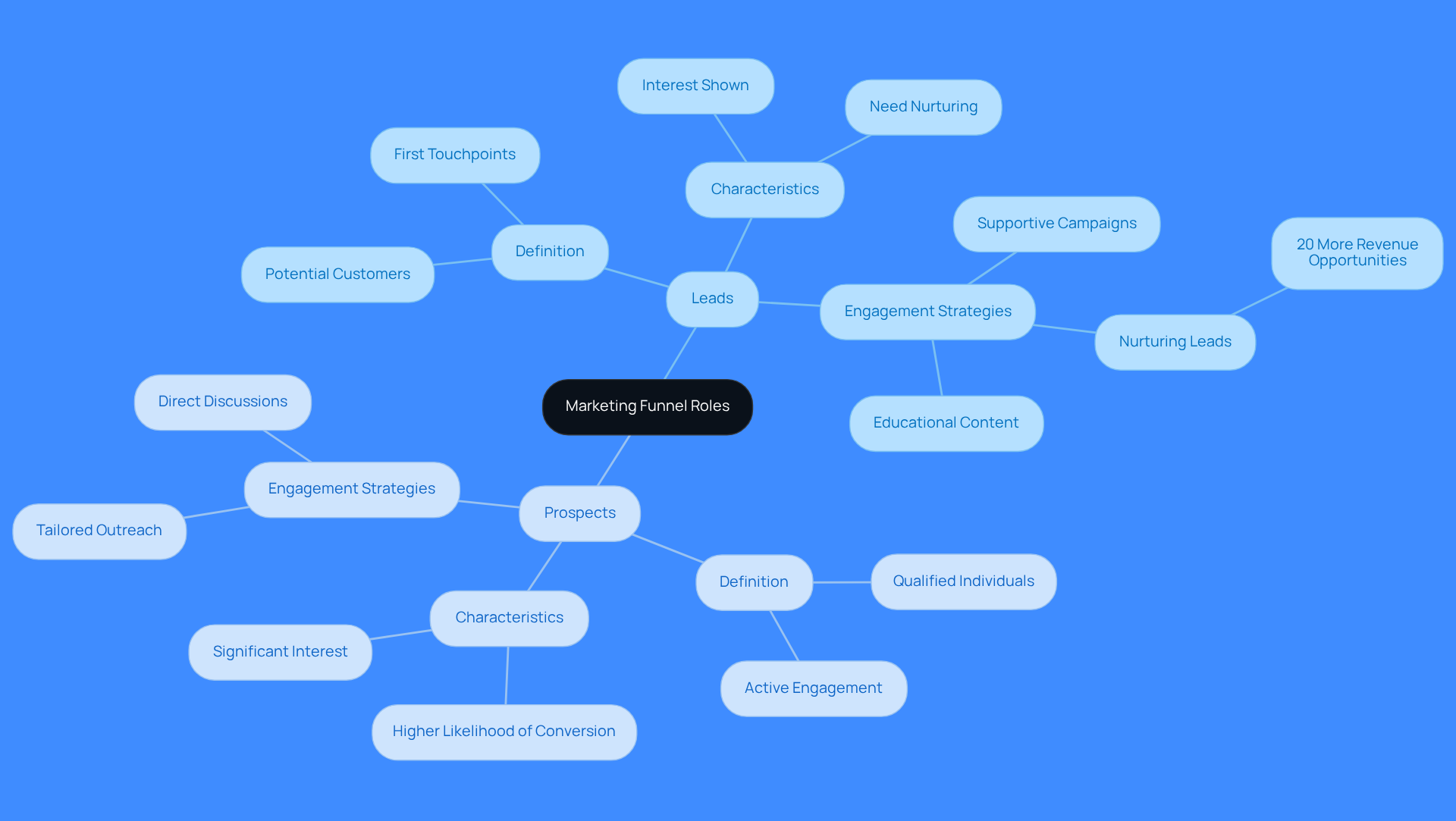
In the marketing funnel, the distinction between prospects and leads is important, as leads are the first touchpoints representing potential customers who have shown interest but need further nurturing. Typically generated through promotional activities, leads require additional engagement. In contrast, prospects are qualified individuals actively engaged in the business process, highlighting the difference between leads and prospects, as they have a higher likelihood of conversion due to their alignment with the company's offerings.
Marketing teams must understand the differences between prospects and leads to optimize their outreach strategies. Leads benefit from educational content and supportive campaigns that guide them deeper into the funnel, generating 20% more conversions than non-nurtured leads. Conversely, prospects are more receptive to tailored outreach and direct discussions, having already expressed significant interest in the product or service.
This differentiation allows marketing teams to allocate resources more effectively, boosting overall sales performance. By focusing on customized approaches for both leads and prospects, organizations can enhance their conversion rates, driving greater success in their sales efforts. A recent campaign exemplifies this strategy, achieving a remarkable 48% positive email response rate through automation and tailored messaging, underscoring the importance of personalization and connecting directly with potential clients.
Utilize Strategies: Engaging Prospects vs. Leads Effectively
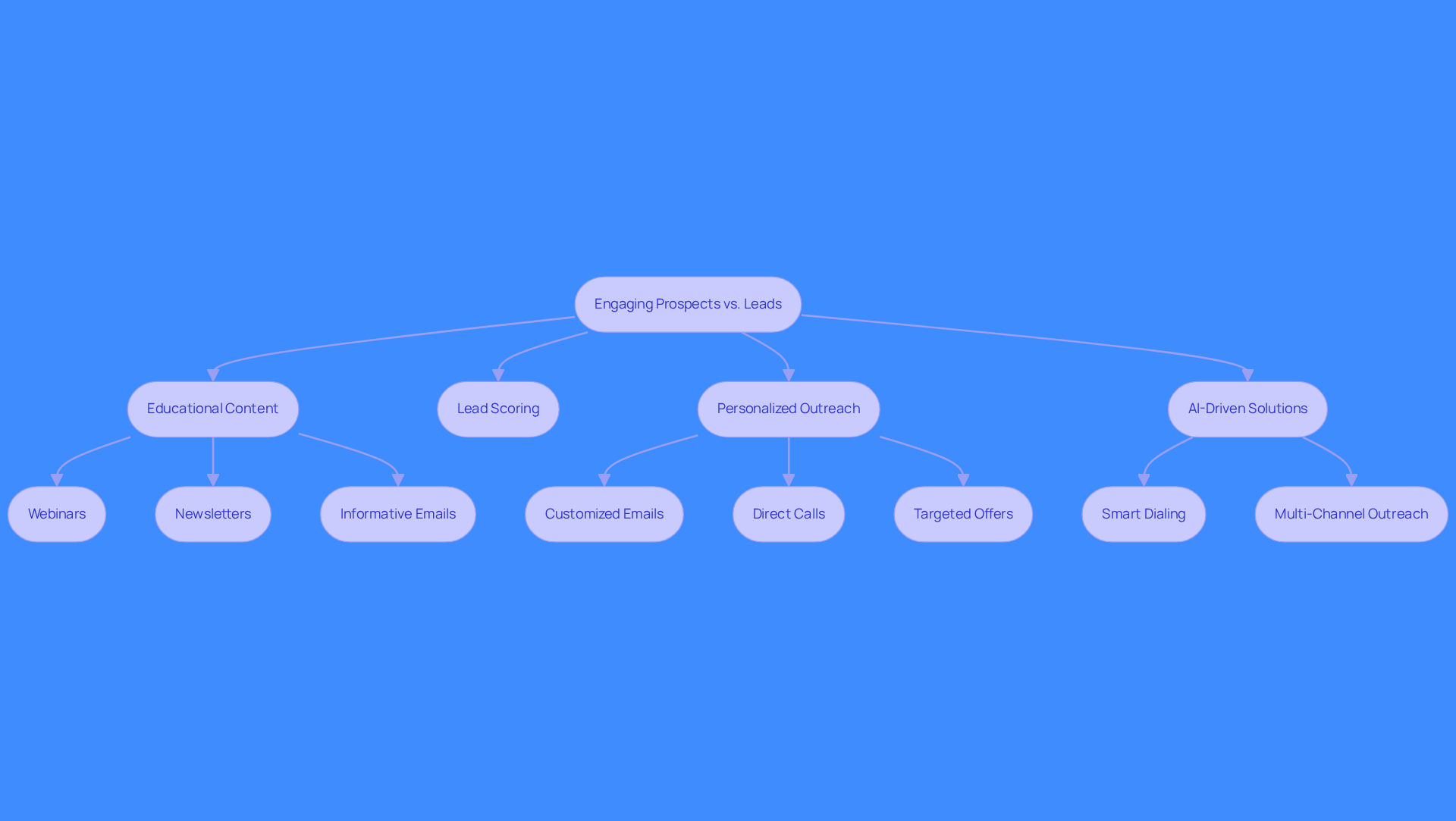
Engaging prospects vs leads effectively requires nurturing them through educational content such as webinars, newsletters, and informative emails. This approach builds trust and guides potential clients toward becoming customers. Techniques such as prioritizing leads based on their engagement levels allow sales teams to focus their efforts where they’re most likely to see results.
However, engaging potential clients demands a more personalized strategy. Sales teams should leverage insights from the qualification process to tailor their messaging and outreach. This means crafting customized emails, making direct calls, and presenting targeted offers that address the specific needs and challenges of each potential client. With automation tools, including CRM systems and multi-channel outreach support, sales teams can automate these processes, ensuring every interaction is meaningful. Regie.ai's smart dialing and signal-driven prioritization enhance the ability to engage potential clients effectively, enabling sales teams to focus on high-opportunity candidates.
By implementing these diverse strategies, sales teams can successfully convert potential clients into leads and ultimately into loyal customers. Statistics indicate that engaged prospects are more likely to convert than those who are not, underscoring the importance of effective engagement. Furthermore, 75% of buyers prefer interacting with salespeople who offer personalized solutions, highlighting the need for tailored outreach in today’s competitive environment. Yet, it’s crucial to recognize that 48% of companies report that most prospects require engagement with multiple influencers, revealing the challenges faced in the nurturing process. Regie.ai addresses these issues by providing clean data and seamless integration with existing tools, enabling teams to maintain effective communication throughout the sales cycle.
Analyze Outcomes: Measuring Success with Prospects and Leads
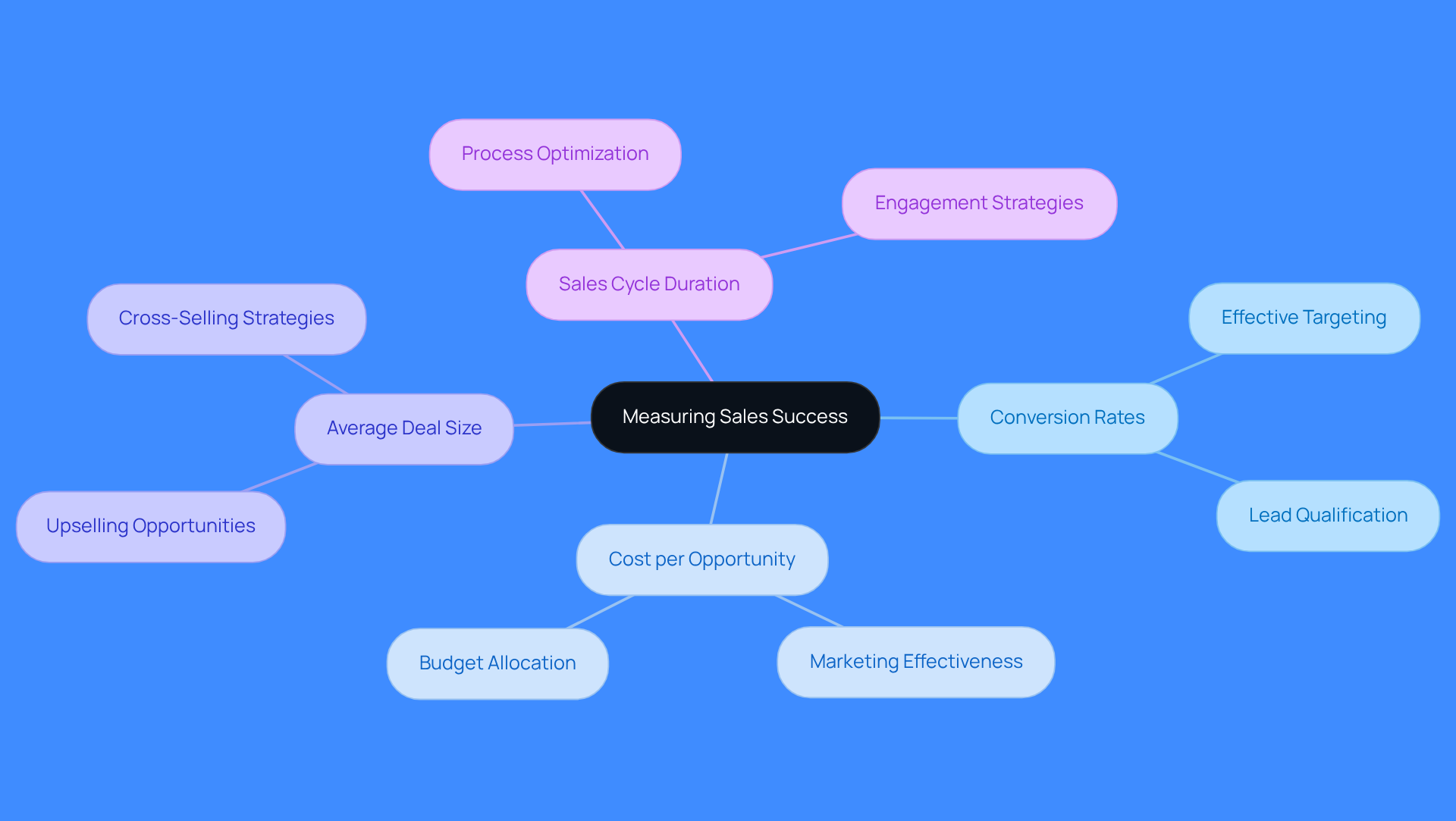
Sales teams often struggle with assessing success due to fragmented metrics like revenue, total opportunities generated, and cost per opportunity. These metrics are vital for evaluating strategies related to sales performance and pinpointing areas for improvement. For instance, the average conversion rate indicates whether representatives are effectively targeting the right potential customers, while the cost per prospect helps gauge the effectiveness of marketing efforts. Automation tools, particularly software solutions, streamline this process by automating outreach and enhancing the buyer experience through dynamic workflows. This allows sales teams to focus on meaningful interactions rather than administrative tasks. Conducting quarterly reviews to identify which metrics drive action and adjusting targets accordingly can further refine performance.
When it comes to potential clients, shift to focus on conversion rates, average deal size, and sales cycle length. These metrics offer insights into how effectively the team engages with prospects vs leads and closes deals. A shorter sales cycle may reveal optimized processes or effective engagement strategies, while a larger average deal size can indicate successful upselling or cross-selling efforts. Regie.ai's analytics capabilities can significantly enhance these metrics by delivering actionable insights that bolster revenue efforts. Understanding the distinction between revenue metrics and KPIs is essential; revenue metrics assess specific activities, while KPIs serve as strategic indicators tied to business objectives. By analyzing these results, including employee satisfaction metrics to gauge team stability and satisfaction, sales teams can refine their strategies, enhance performance, and ultimately drive revenue growth. Leveraging AI tools like Regie.ai can also improve metric tracking, providing deeper insights into sales effectiveness.
Conclusion
Understanding the difference between prospects and leads is crucial for driving sales success. Both terms refer to potential customers, but they exist at different stages in the sales funnel. Prospects are more qualified and engaged than leads. This distinction enables sales teams to tailor their strategies effectively, ensuring outreach resonates with the right audience and boosts conversion rates.
Insights reveal that only a small percentage of marketing prospects qualify for sales engagement, highlighting the need for systematic qualification processes. Nurturing leads through targeted strategies can significantly enhance revenue opportunities, while personalized outreach to prospects accelerates their journey through the sales cycle. With tools like Regie.ai, sales teams can optimize their approaches, leveraging automation and data-driven insights to enhance communication and engagement.
Effectively managing prospects and leads streamlines the sales process and contributes to higher conversion rates and increased revenue. Organizations must prioritize understanding these differences and implementing tailored strategies to engage both prospects and leads. This approach creates a more efficient sales funnel, leading to greater success in a competitive marketplace.
Frequently Asked Questions
What is the difference between a prospect and a lead?
A prospect is someone who has shown interest in a company's offerings, while a lead is a qualified prospect who aligns with the ideal customer profile and shows a higher likelihood of making a purchase.
Are prospects qualified for sales engagement?
No, prospects are usually unqualified as they have not been assessed against specific criteria indicating their potential to become paying clients.
What percentage of marketing prospects typically qualify for direct sales engagement?
Only 25% of marketing prospects qualify for direct sales engagement.
How does a qualified prospect differ from a lead?
A qualified prospect aligns with the ideal customer profile and engages in two-way communication with sales teams, indicating their readiness to explore solutions further.
What impact do nurturing strategies have on prospects?
Organizations that implement systematic nurturing strategies can see prospects move through sales cycles 23% faster.
What is the expected conversion rate of marketing-qualified prospects to sales-qualified prospects by 2026?
By 2026, only 13% of marketing-qualified prospects are expected to convert to sales-qualified prospects.
How can sales teams enhance their outreach efforts?
By understanding the distinctions between prospects and leads, sales teams can tailor their outreach efforts to enhance conversion rates and drive revenue growth.
What tools does Regie.ai offer to assist sales teams?
Regie.ai offers dynamic workflows and AI prospecting agents that automate outreach, ensuring sales teams connect with the right contacts at the right time with personalized messaging.
List of Sources
- Define Prospect and Lead: Key Distinctions in Sales Terminology
- crazyegg.com (https://crazyegg.com/blog/real-examples-show-stopping-case-studies)
- prospeo.io (https://prospeo.io/s/lead-generation-case-study)
- 35 Lead Qualification Statistics: Essential Data for B2B Sales Success in 2026 | Landbase (https://landbase.com/blog/lead-qualification-statistics)
- cognism.com (https://cognism.com/blog/difference-between-prospect-lead)
- salesroads.com (https://salesroads.com/tactics/lead-vs-prospect)
- Examine Roles: How Prospects and Leads Drive Sales Success
- Why Lead Generation Is Becoming a Strategic Challenge for Sales Leaders in 2026 (https://linkedin.com/pulse/why-lead-generation-becoming-strategic-challenge-sales-sam-sinha-npdkf)
- activatedscale.com (https://activatedscale.com/blog/lead-generation-quotes-for-sales)
- electroiq.com (https://electroiq.com/stats/sales-funnel-statistics)
- venturz.co (https://venturz.co/blog/sales-funnel-statistics)
- theinsightcollective.com (https://theinsightcollective.com/insights/lead-generation-quotes)
- Utilize Strategies: Engaging Prospects vs. Leads Effectively
- activatedscale.com (https://activatedscale.com/blog/lead-generation-quotes-for-sales)
- leadspicker.com (https://leadspicker.com/articles/effective-prospecting-proven-strategies-to-boost-your-sales-success)
- Lead Nurturing Statistics: 20 Key Insights (2026) (https://ventureharbour.com/20-insightful-lead-nurturing-statistics-charts)
- donemaker.com (https://donemaker.com/the-new-b2b-outreach-playbook)
- invespcro.com (https://invespcro.com/blog/lead-nurturing)
- Analyze Outcomes: Measuring Success with Prospects and Leads
- showpad.com (https://showpad.com/enterprise-sales-leadership-quotes)
- barnraisersllc.com (https://barnraisersllc.com/2019/05/05/15-lead-generation-case-studies-major-success)
- monday.com (https://monday.com/blog/crm-and-sales/sales-metrics)
- revenue.io (https://revenue.io/blog/motivational-sales-quotes-from-revenue-and-top-industry-leaders)
- linkedin.com (https://linkedin.com/pulse/case-studies-successful-lead-scoring-practices-impact-sales-hxqxc)