Lead Management and CRM
5 Best Practices for Account Management to Boost Revenue Growth
The Regie Team
|
Jul 12, 2026

Introduction
Many businesses struggle with the complexities of account management, which can hinder revenue growth. Navigating client expectations is a significant challenge that can lead to missed opportunities. By adopting best practices in account management, businesses can not only meet client expectations but also drive significant revenue growth.
Understand Client Needs and Expectations
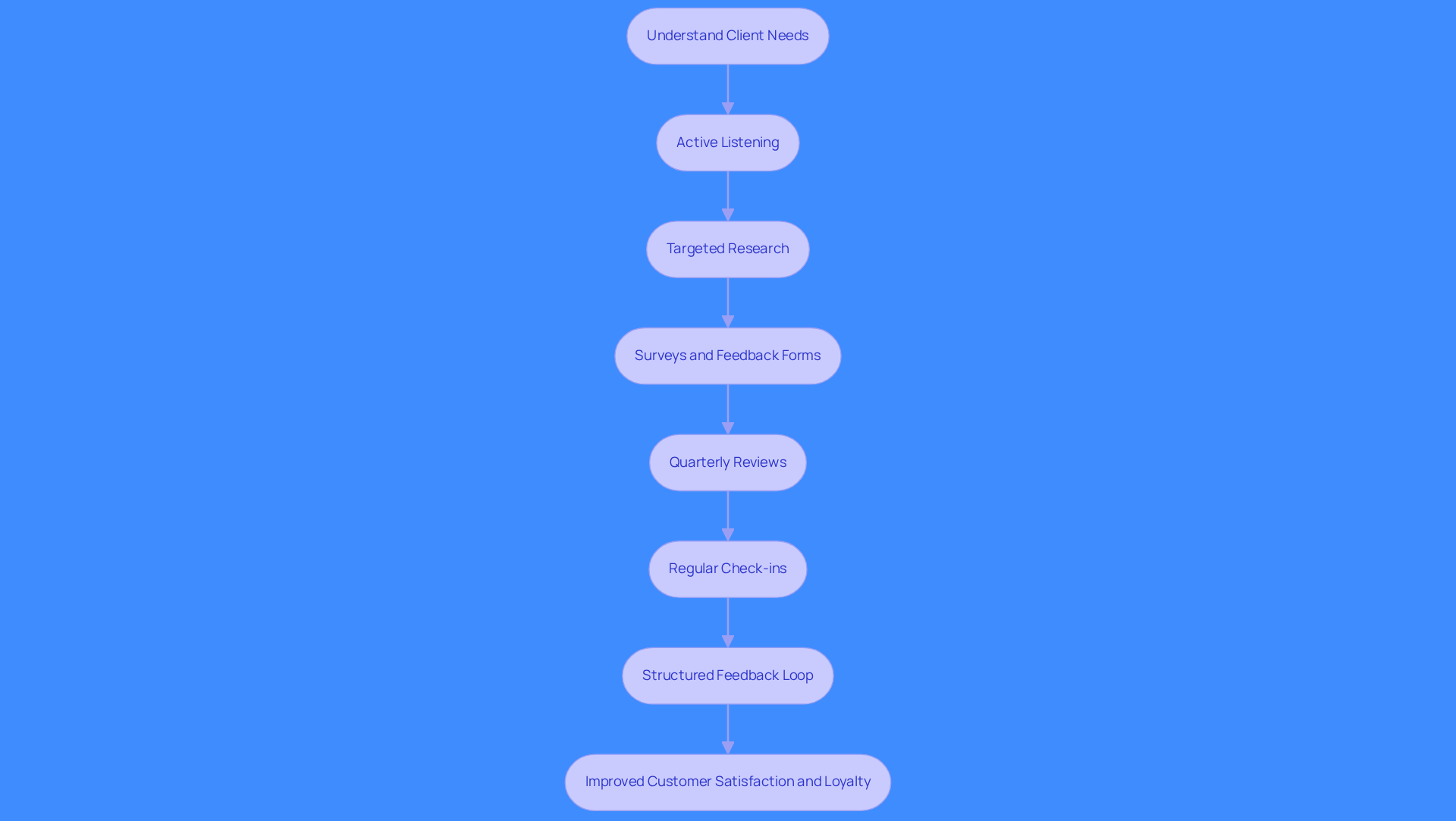
Understanding customer needs is often fragmented and inefficient, leading to missed opportunities in revenue growth. Effective management demands active listening and targeted research to uncover customer needs. Surveys and feedback forms yield direct insights, enabling account managers to refine their strategies. Quarterly reviews and regular check-ins reveal shifts in customer needs, ensuring alignment with their goals. Implementing a structured feedback loop enhances customer satisfaction and loyalty, demonstrating commitment to their evolving needs. This strategic focus not only enhances customer loyalty but also drives measurable revenue outcomes.
Build Strong Relationships with Key Accounts
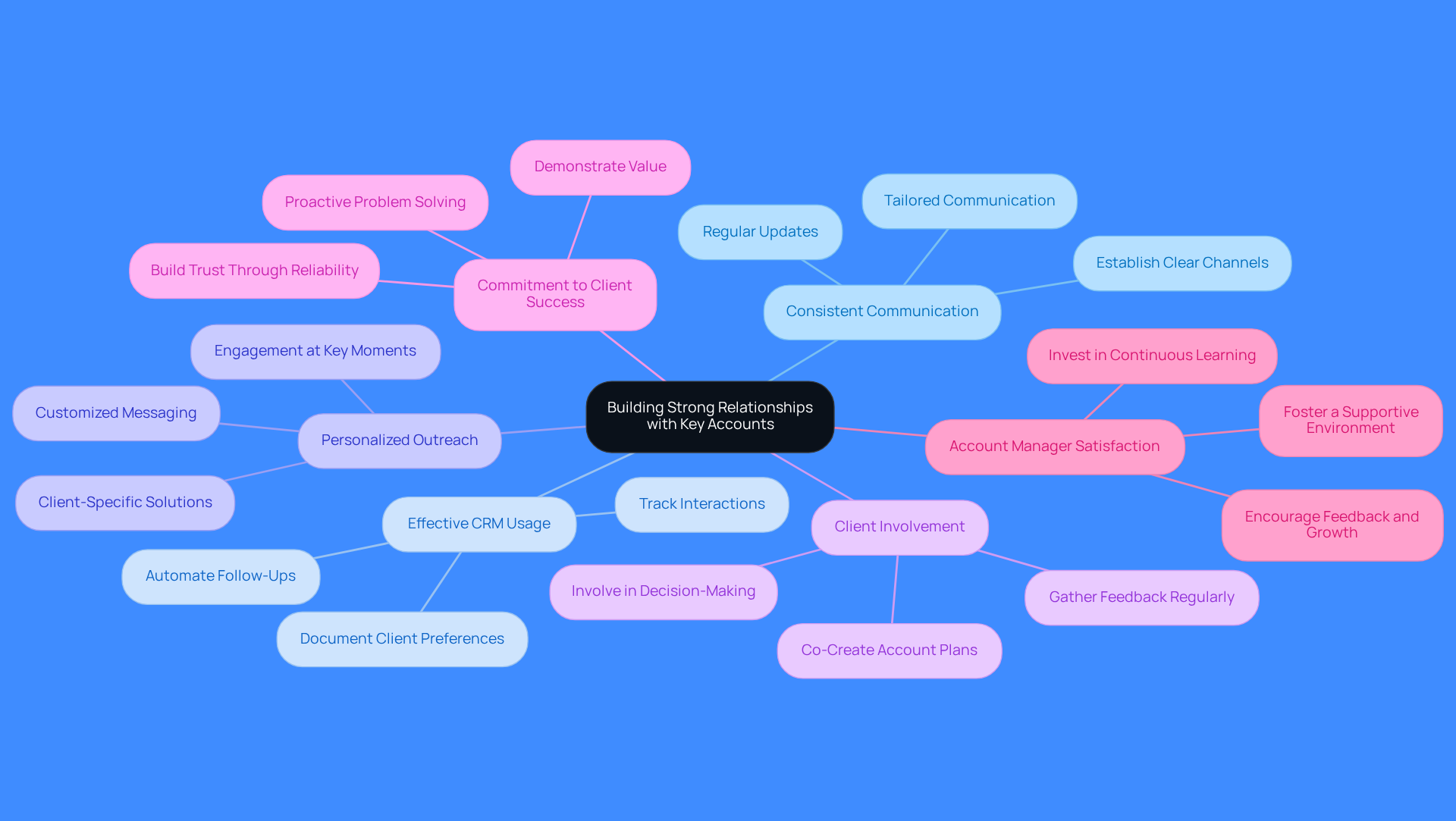
Key accounts often suffer from inconsistent communication, leading to missed revenue opportunities. Effective CRM usage ensures timely follow-ups and tracks interactions, directly impacting revenue outcomes. Personalized outreach at key moments can strengthen client relationships and drive engagement. Involving clients in decisions about their portfolios leads to better alignment and trust. Demonstrating commitment to client success builds trust, essential for long-term revenue growth. High satisfaction with account managers directly correlates with increased client engagement and revenue potential.
Leverage Data-Driven Insights for Strategic Decisions
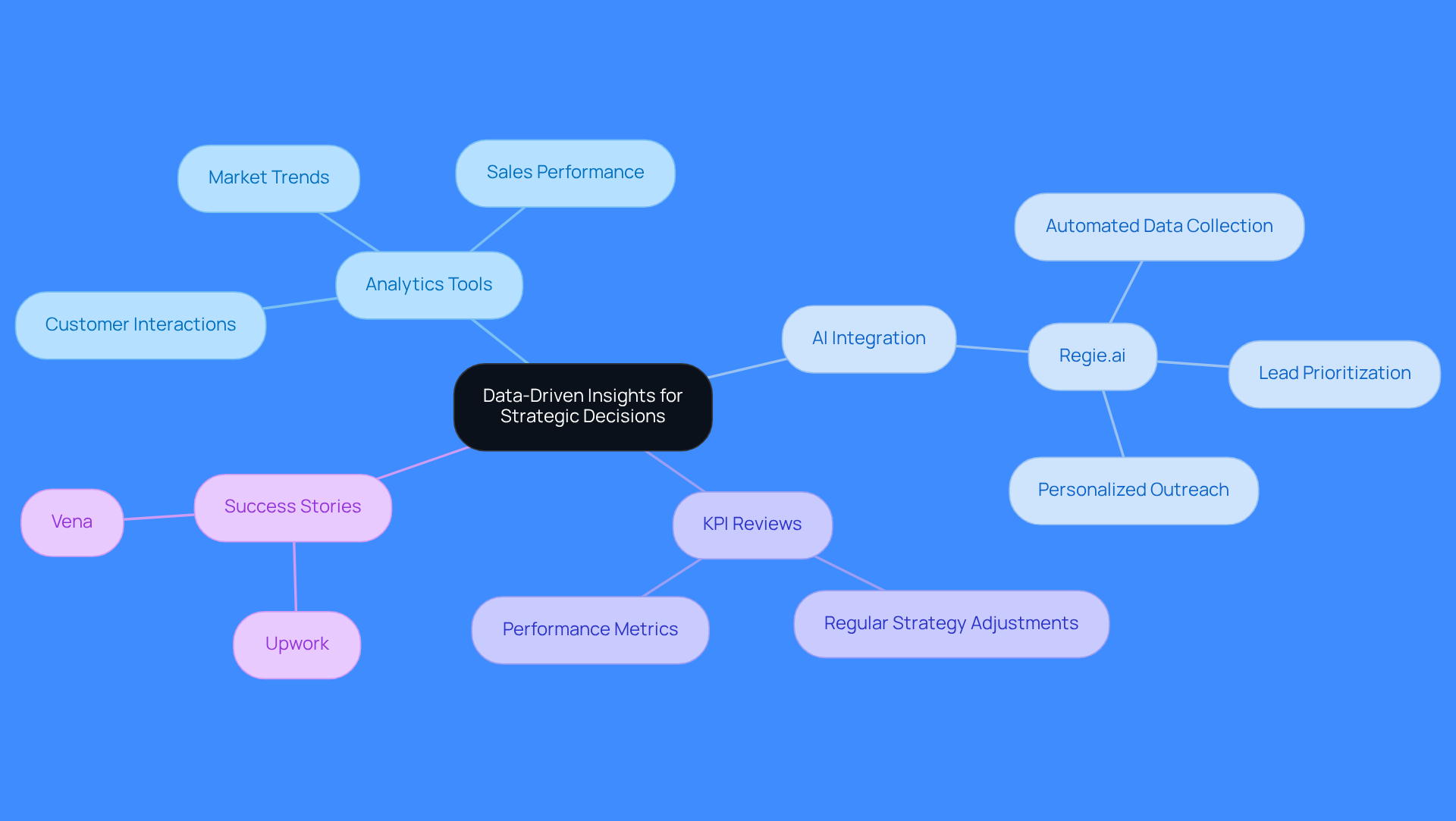
Improving decision-making in account management relies on data-driven insights and the best practices for account management. Account representatives should use advanced analytics tools to effectively track customer interactions, sales performance, and market trends. Analyzing past purchase behaviors helps predict future needs, allowing for tailored offerings that meet client expectations. Regular KPI reviews are crucial for adjusting strategies to meet changing demands.
Integrating AI-driven tools like Regie.ai automates data collection and analysis, enabling managers to focus on building relationships. Regie.ai's AI Agents utilize over 100 signals from platforms like Google, LinkedIn, and G2 to prioritize leads based on real buying intent, ensuring timely and relevant communications. This shift optimizes strategies and drives revenue by relying on solid data for decision-making. For instance, Regie.ai has achieved a remarkable 48% positive email reply rate through personalized outreach, demonstrating how automation enhances engagement.
As organizations increasingly embrace data-driven decision-making, leveraging these insights will be essential for maintaining a competitive edge by implementing best practices for account management by 2026. Success stories from clients like Upwork and Vena illustrate how Regie.ai's platform can transform sales development, leading to significant pipeline growth and improved customer retention strategies.
Establish a Structured Approach to Account Planning
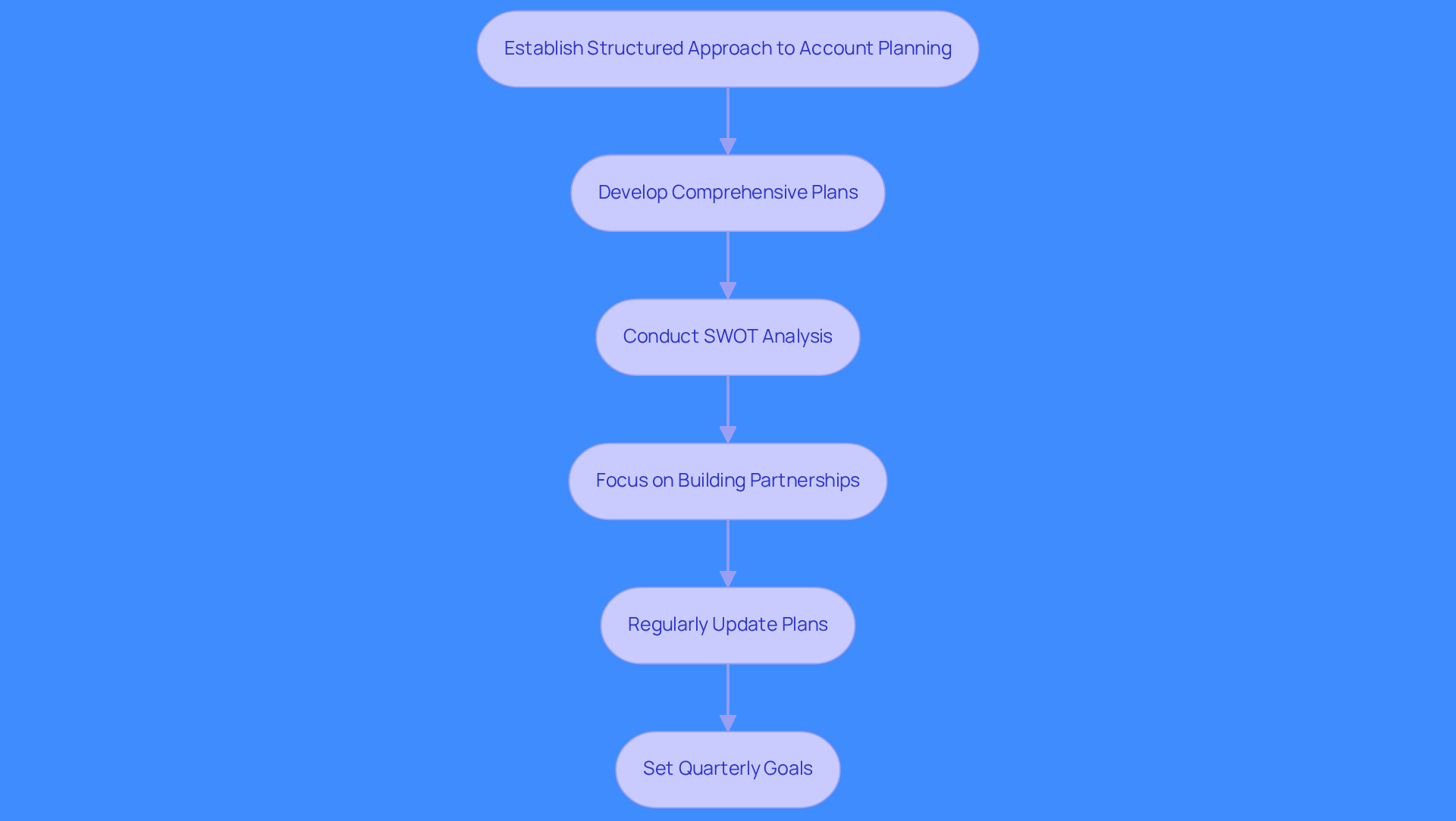
Many organizations struggle to maximize the value of their key clients due to ineffective planning processes. Managers should develop comprehensive plans that outline objectives, strategies, and key performance indicators (KPIs).
Using a SWOT analysis allows teams to pinpoint key factors affecting each client, ensuring a clear understanding of their situation. Account planning should focus on building partnerships by utilizing best practices for account management, which require ongoing engagement with stakeholders to adapt to evolving client needs.
Regularly updating plans is considered one of the best practices for account management to ensure alignment with shifting customer objectives. Setting quarterly goals and reviewing them in client meetings fosters accountability and focus.
Organizations with structured management programs see a 15% increase in profits and a 20% boost in customer satisfaction. A structured approach allows managers to allocate resources efficiently and track progress toward customer goals, driving revenue growth. This highlights the importance of nurturing existing relationships through effective planning.
Embrace Continuous Improvement and Adaptation
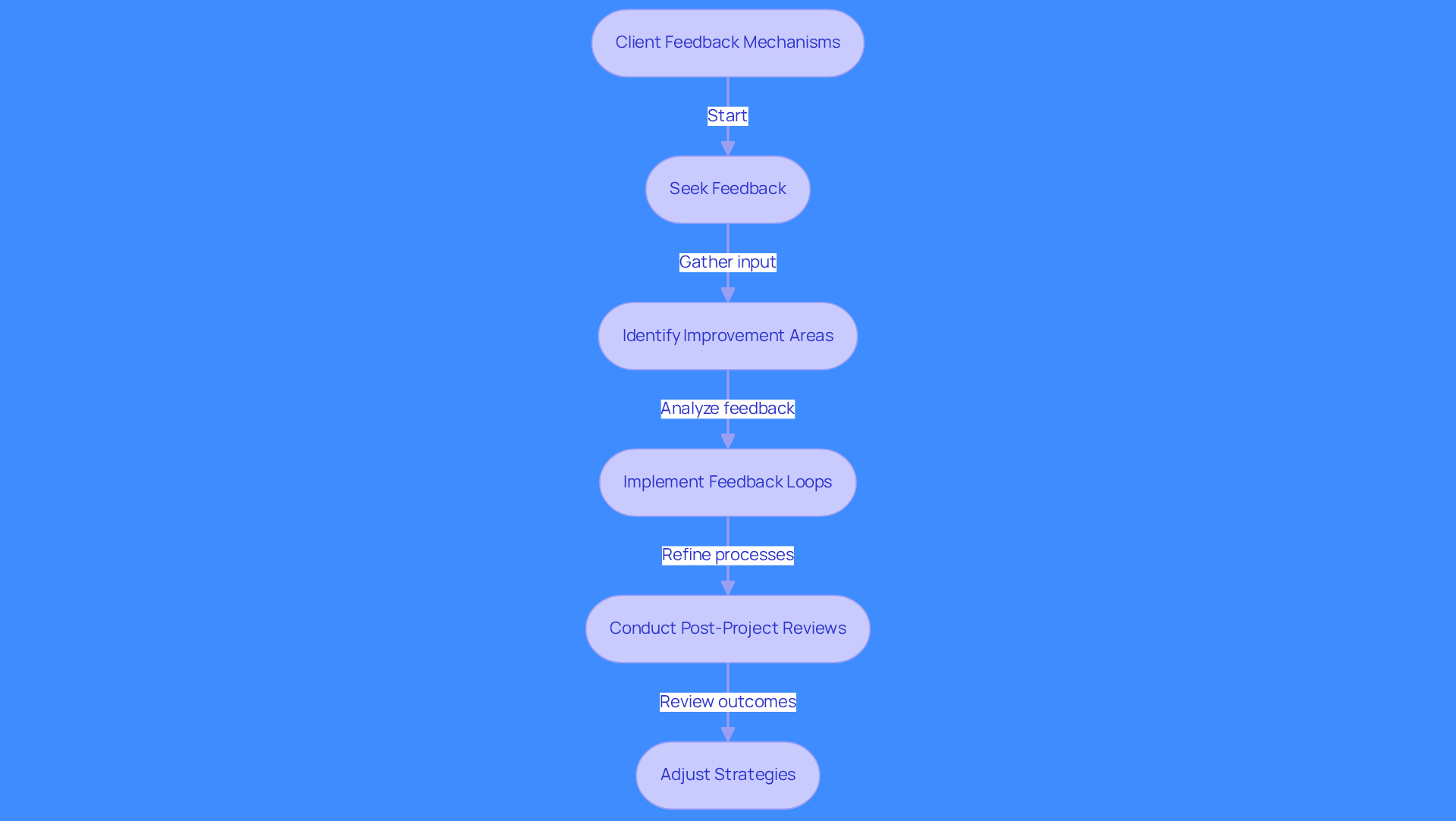
Client representatives face challenges in maintaining a competitive edge due to outdated feedback mechanisms. They need to actively seek feedback from clients and teams to identify improvement areas. A structured feedback loop allows for ongoing adjustments that enhance service delivery. Post-project reviews provide insights into what works and what needs improvement.
Regie.ai uses over 100 indicators from platforms like Google and LinkedIn to prioritize leads based on real purchasing intent, helping leaders adjust strategies effectively. A case study shows a software company cut code defects by 40% after implementing feedback loops. Customer complaints fell by 50%, showing improved satisfaction and consistency.
Kade Thomas emphasizes that embracing change helps managers enhance effectiveness and drive revenue growth. Regie.ai is committed to helping customers succeed with a diverse team that values unique perspectives. Our G2 Momentum Leader and Grid Leader awards reflect our dedication to customer success through the adoption of best practices for account management in the evolving landscape.
Conclusion
Effective account management practices drive revenue growth. By focusing on client needs, building strong relationships, leveraging data-driven insights, and maintaining structured planning, organizations can enhance their account management strategies. These practices directly address inefficiencies in account management, driving loyalty and revenue. The integration of tools like Regie.ai streamlines these processes, allowing account managers to prioritize leads based on real buying intent and craft personalized messaging that resonates with clients. Continuous feedback and adaptation ensure that account strategies remain relevant and effective in meeting evolving client expectations.
Robust account management is essential for revenue success. Organizations that prioritize these strategies are better positioned to capitalize on revenue opportunities and maintain a competitive advantage.
Frequently Asked Questions
Why is understanding client needs important for revenue growth?
Understanding client needs is crucial because it helps uncover opportunities for revenue growth. Active listening and targeted research can reveal customer expectations, allowing account managers to refine their strategies and align with client goals.
How can account managers gather insights into customer needs?
Account managers can gather insights through surveys and feedback forms, which provide direct information about customer preferences. Additionally, quarterly reviews and regular check-ins can help identify shifts in customer needs.
What is the benefit of implementing a structured feedback loop?
A structured feedback loop enhances customer satisfaction and loyalty by demonstrating a commitment to evolving customer needs. This strategic focus not only improves loyalty but also drives measurable revenue outcomes.
What challenges do key accounts face regarding communication?
Key accounts often experience inconsistent communication, which can lead to missed revenue opportunities. Effective communication is essential for maintaining strong relationships and ensuring client engagement.
How does effective CRM usage impact revenue outcomes?
Effective CRM usage ensures timely follow-ups and tracks interactions with clients, which directly impacts revenue outcomes by fostering better relationships and engagement.
What role does personalized outreach play in client relationships?
Personalized outreach at key moments can strengthen client relationships and drive engagement, making clients feel valued and understood.
Why is involving clients in decision-making important?
Involving clients in decisions about their portfolios leads to better alignment and trust, which are essential for building long-term relationships and driving revenue growth.
How does client satisfaction with account managers affect revenue potential?
High satisfaction with account managers is directly correlated with increased client engagement and revenue potential, as satisfied clients are more likely to remain loyal and invest further.
List of Sources
- Understand Client Needs and Expectations
- 10 Account Management Strategies That Drive Revenue (2026) (https://salesmotion.io/blog/account-management-strategies)
- The Importance of Customer FeedbackTurn Survey Data into Actionable Insights with Dashboards and Sentiment Analysis (https://smartsurvey.com/blog/importance-of-customer-feedback)
- Shaping the Future of Account Management: Key Trends and Forecasts (https://clickacademyasia.com/post/shaping-the-future-of-account-management-key-trends-and-forecasts)
- Client Relationship Management in Key Account Programs (https://introhive.com/blog-posts/client-relationship-management-key-accounts)
- The 2025 client shift - what every account manager needs to know (https://linkedin.com/pulse/2025-client-shift-what-every-account-manager-needs-know-jenny-plant-9rbwe)
- Build Strong Relationships with Key Accounts
- 10 Account Management Strategies That Drive Revenue (2026) (https://salesmotion.io/blog/account-management-strategies)
- 10 Proven Steps to Stronger Client Relationships (Key Account Manager Edition) (https://linkedin.com/pulse/10-proven-steps-stronger-client-relationships-key-account-brown-g3tie)
- The 7 best practices for account management strategy in 2026 (https://juro.com/learn/account-management-strategy)
- 15 Key Account Management Best Practices for 2026 - The KAM Coach (https://thekamcoach.com/key-account-management-best-practices)
- How to Build Stronger Client Relationships in 2026 (https://topechelon.com/recruiter-training/how-to-build-stronger-client-relationships-in-2026)
- Leverage Data-Driven Insights for Strategic Decisions
- 2026 Analytics: The Future of Data-Driven Decision Making (https://sift-ag.com/news/2026-analytics-the-future-of-data-driven-decision-making)
- 6 expert predictions to build a data-driven business in 2026 - Piano.io (https://piano.io/resources/future-of-data-driven-business-2026-trends)
- Data-Driven Decision-Making: Why Analytics Are Crucial for Business Success (https://indwes.edu/articles/2024/11/data-driven-decision-making-why-analytics-are-crucial-for-business-success)
- Unlock Data-Driven Insights for Smarter Decisions (https://acceldata.io/blog/how-data-driven-insights-transform-business-decisions-and-growth)
- What Is Data-Driven Decision-Making? | IBM (https://ibm.com/think/topics/data-driven-decision-making)
- Establish a Structured Approach to Account Planning
- Sales Account Planning - A Step by Step Guide (https://demandfarm.com/blog/sales-account-planning)
- 11 account planning best practices to win more business | Outreach (https://outreach.ai/resources/blog/account-planning-deep-dive)
- Key Account Planning Process for Account Managers (https://demandfarm.com/blog/key-account-planning-process)
- Account planning: How to grow key accounts and increase revenue (https://affinity.co/guides/account-planning-how-to-grow-key-accounts-and-increase-revenue)
- Embrace Continuous Improvement and Adaptation
- Feedback loops: turning intelligence into action (https://management-issues.com/opinion/7796/feedback-loops-turning-intelligence-into-action)
- Continuous Process Improvement: Why Your Business Needs It (https://usf.edu/continuing-education/lifelong-learning/news/2021/continuous-process-improvement-why-your-business-needs-it.aspx)
- How to Achieve Continuous Improvement in Business Processes (https://systemsandteams.com/how-to-achieve-continuous-improvement-in-business-processes)
- How Well Does Your Organization Use Feedback Loops? (https://forbes.com/sites/danielnewman/2016/08/02/how-well-does-your-organization-use-feedback-loops)
- What Is a Feedback Loop and How Does It Work? - Qualtrics (https://qualtrics.com/articles/customer-experience/feedback-loop)