Sales
Master Sales Pipeline Management with CRM: 4 Best Practices
The Regie Team
|
Aug 19, 2026

Introduction
Sales pipeline management often suffers from fragmented tech stacks and outdated workflows, hindering revenue potential. Sales teams often struggle with unclear stages and criteria, leading to inefficiencies in managing leads. Sales and marketing teams must confront the reality of their disjointed efforts to improve pipeline efficiency and drive growth. This article outlines four best practices that address these challenges, integrating technology to foster alignment and enhance pipeline efficiency.
Define Clear Stages and Criteria for Your Sales Pipeline
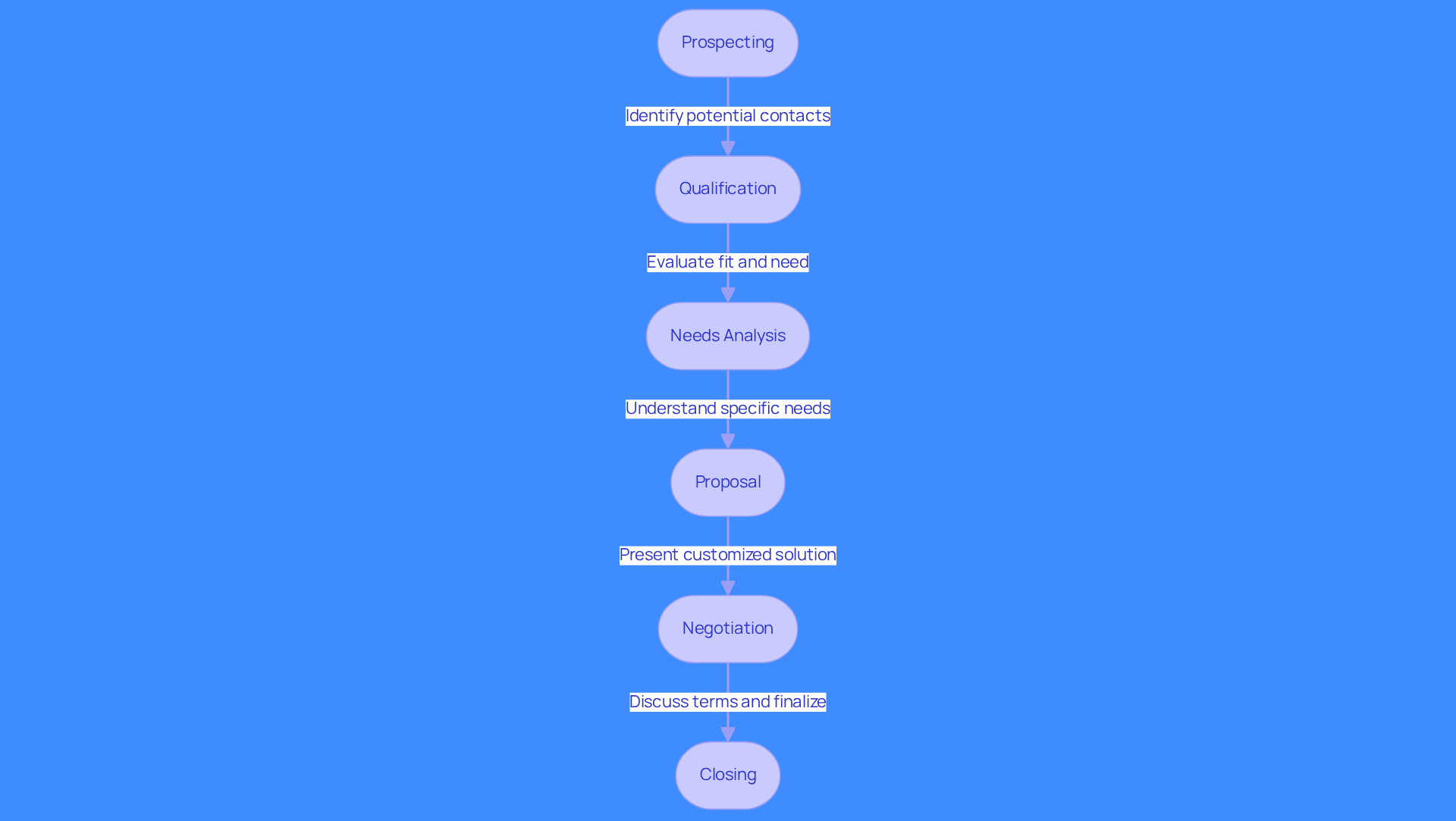
Effectively overseeing your revenue process relies on implementing sales pipeline management CRM to establish clear phases that align with the buyer's journey. Each stage should have specific criteria that dictate when a deal transitions from one phase to the next. A typical sales pipeline may include the following stages:
- Prospecting: Identify potential contacts through various channels, such as industry events and online platforms. With Regie.ai, AI Prospecting Agents manage the busywork, enabling your team to concentrate on interacting with prospects that are already prepared for conversation.
- Qualification: Evaluate if prospects match your ideal customer profile, ensuring they possess a genuine need and the capacity to buy. Regie.ai utilizes over 100 signals from platforms such as Google and LinkedIn to prioritize prospects based on genuine buying intent, improving your qualification process.
- Needs Analysis: Understand the specific needs and pain points of the prospect, which is essential for tailoring your approach. Regie.ai's AI Agents craft personalized messaging across email, LinkedIn, and calls, ensuring your outreach resonates with each prospect's unique context.
- Proposal: Present a customized solution that directly addresses the prospect's identified needs, enhancing the likelihood of engagement. With Regie.ai, you can ensure that every touchpoint remains on-brand and message-consistent, tied back to your content strategy.
- Negotiation: Discuss terms and conditions to reach a mutual agreement, ensuring both parties feel confident in the deal. Regie.ai's data enrichment capabilities help maintain clean CRM data, facilitating smoother negotiations.
- Closing: Finalize the deal and secure the contract, marking the successful conversion of the lead. By utilizing Regie.ai, sales groups can expand their reach and meetings without increasing personnel, effectively boosting their closing rates.
These phases help marketing teams track progress, identify challenges, and allocate resources effectively using sales pipeline management CRM. Regular reviews of these stages are vital to ensure they remain relevant and aligned with evolving market conditions. Studies show that groups that assess their workflow consistently attain 87% forecast precision, in contrast to only 52% for those that do not. Moreover, firms with a clearly outlined selling procedure generate 18% more income than rivals. Without defined stages, only a small fraction of companies achieve forecast accuracy above 90%, highlighting the necessity for sales pipeline management CRM to establish a structured sales process. A well-structured sales process functions as an execution system, guaranteeing that selling efforts are organized and efficient.
Leverage Technology and Automation to Enhance Pipeline Management
Many revenue teams struggle with disjointed processes that hinder efficiency. Implement these strategies to streamline your revenue management process:
- Utilize CRM Systems: A robust CRM system centralizes data, providing a clear view of your revenue pipeline for informed decision-making.
- Automate Follow-Ups: Automation tools ensure follow-ups are timely, allowing reps to focus on high-value activities.
- Integrate AI Tools: Leverage AI-driven solutions like Regie.ai to analyze engagement data and optimize outreach strategies. AI prioritizes leads based on conversion likelihood, directing focus to high-potential opportunities. AI-driven solutions are already transforming how teams manage data and optimize outreach strategies.
- Monitor Performance Metrics: Track KPIs like conversion rates and revenue velocity to drive performance improvements. Consistently assessing these metrics leads to informed decisions that enhance performance and accelerate revenue growth.

Regularly Evaluate and Optimize Your Sales Pipeline
To maintain a robust revenue stream, regular assessments are essential. Here are effective strategies to implement:
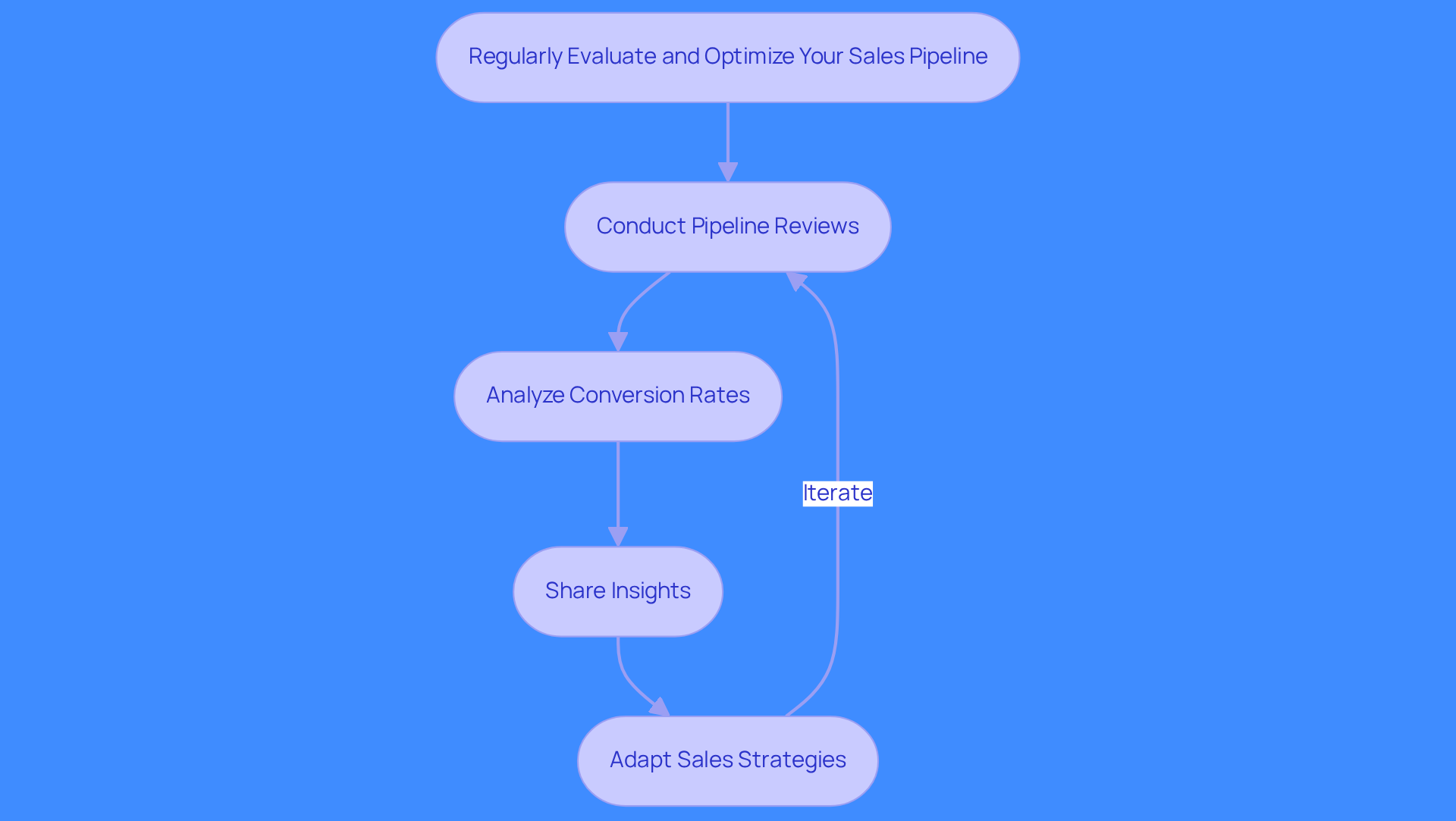
- Conduct Pipeline Reviews: Schedule consistent meetings with your sales team to review the pipeline. Discuss the status of deals, identify bottlenecks, and gather feedback on the sales process. Regular reviews foster accountability and ensure that all team members are aligned on deal progress.
- Analyze Conversion Rates: Monitor conversion rates at each stage of the process. If certain stages exhibit low conversion rates, investigate the underlying reasons and adjust your approach accordingly. This data-driven analysis is essential for enhancing revenue strategies.
- Challenge your representatives to share insights on pipeline stages and criteria to uncover hidden inefficiencies. Their firsthand experiences can highlight challenges and opportunities for enhancement, leading to a more efficient selling process.
- Adapt your sales strategies immediately based on evaluation outcomes to stay competitive. This may involve redefining stages, updating criteria, or implementing new tools to enhance efficiency. Adaptability in strategy is essential for adjusting to market changes and enhancing project health.
Regular assessments are crucial for organizations focused on sales pipeline management crm to achieve revenue targets and drive growth. Research indicates that companies with organized management processes for their projects experience significantly higher revenue growth rates. Prioritizing these evaluations ensures that sales teams not only achieve their targets but also build a sustainable path for future growth.
Align Sales and Marketing Efforts for Cohesive Pipeline Management
Effective sales pipeline management crm hinges on the alignment of revenue generation and marketing efforts. Here are some best practices:
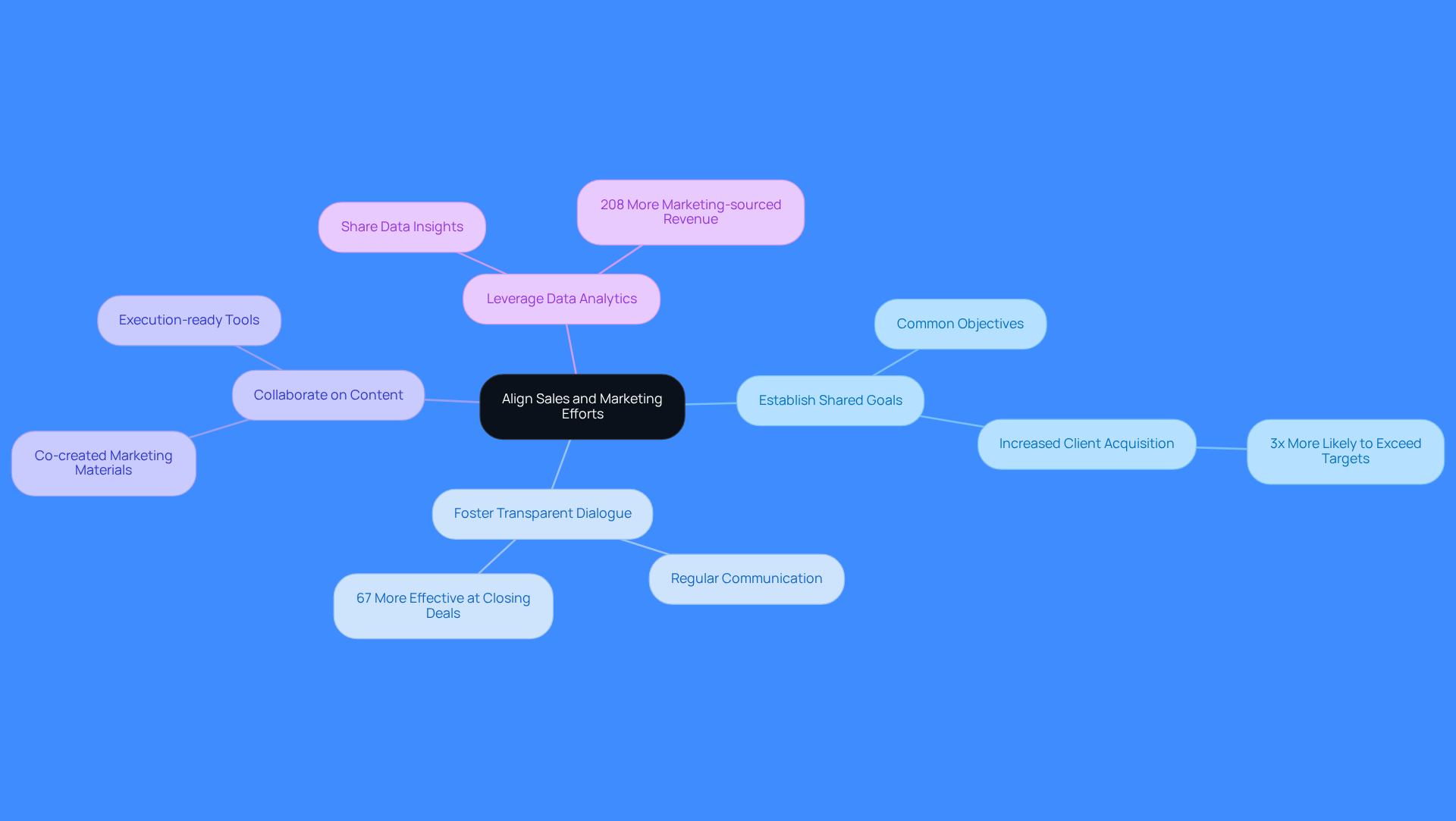
- Establish Shared Goals: Set common objectives that both teams can work towards, such as lead conversion rates or revenue targets. Organizations that prioritize alignment are nearly three times more likely to exceed new client acquisition targets.
- Foster Transparent Dialogue: Encourage regular communication between marketing and sales departments. Consistent interaction ensures both teams are aware of ongoing campaigns and can provide feedback on lead quality. Teams that communicate regularly close deals 67% more effectively.
- Collaborate on Content: Work together to create marketing materials that assist the selling process. This includes case studies, whitepapers, and other resources that help representatives engage prospects effectively. Execution-ready tools like case studies reinforce alignment and support revenue outcomes.
- Leverage Data Analytics: Share data insights among teams to understand which marketing efforts drive the most qualified leads. This information can refine both marketing strategies and sales approaches. Aligned teams generate 208% more marketing-sourced revenue, highlighting the impact of effective data sharing on sales pipeline management crm success. When teams align, they don’t just meet targets; they redefine what’s possible in revenue generation.
Conclusion
Many organizations face significant challenges in managing their sales pipelines effectively, leading to lost revenue opportunities and inefficient processes. Defining clear stages and leveraging technology can streamline sales processes and improve performance evaluation. Structured stages in the sales pipeline enhance tracking, resource allocation, and forecast accuracy. Regie.ai optimizes outreach and engagement, allowing sales teams to focus on high-potential opportunities. Without adopting these practices and leveraging tools like Regie.ai, organizations risk falling behind in a competitive market where efficiency is key to success.
Frequently Asked Questions
What is the importance of defining clear stages in a sales pipeline?
Defining clear stages in a sales pipeline is crucial for effectively overseeing the revenue process. It helps align the sales process with the buyer's journey and ensures that each stage has specific criteria for transitioning deals, which enhances overall sales efficiency.
What are the typical stages of a sales pipeline?
A typical sales pipeline includes the following stages: Prospecting, Qualification, Needs Analysis, Proposal, Negotiation, and Closing.
How does Regie.ai assist in the Prospecting stage?
Regie.ai's AI Prospecting Agents manage the busywork involved in identifying potential contacts, allowing sales teams to focus on engaging with prospects who are ready for conversation.
What role does Regie.ai play in the Qualification stage?
Regie.ai utilizes over 100 signals from platforms like Google and LinkedIn to prioritize prospects based on genuine buying intent, improving the qualification process by ensuring that prospects match the ideal customer profile.
How does Regie.ai enhance the Needs Analysis stage?
Regie.ai's AI Agents craft personalized messaging across email, LinkedIn, and calls, ensuring that outreach resonates with each prospect's unique needs and pain points.
What is the purpose of the Proposal stage in the sales pipeline?
The Proposal stage involves presenting a customized solution that directly addresses the prospect's identified needs, which increases the likelihood of engagement.
How does Regie.ai facilitate the Negotiation stage?
Regie.ai's data enrichment capabilities help maintain clean CRM data, which facilitates smoother negotiations by ensuring that both parties have accurate and relevant information.
What happens during the Closing stage of the sales pipeline?
The Closing stage involves finalizing the deal and securing the contract, marking the successful conversion of the lead. Regie.ai helps sales teams expand their reach and meetings without increasing personnel, effectively boosting closing rates.
Why is regular review of sales pipeline stages important?
Regular reviews of sales pipeline stages are vital to ensure they remain relevant and aligned with evolving market conditions. Consistent assessment leads to higher forecast precision and better resource allocation.
What are the benefits of having a clearly outlined selling procedure?
Firms with a clearly outlined selling procedure generate 18% more income than rivals and achieve higher forecast accuracy, with only a small fraction of companies reaching above 90% accuracy without defined stages.
List of Sources
- Define Clear Stages and Criteria for Your Sales Pipeline
- Building a Sales Pipeline: Ultimate Guide (https://pipedrive.com/en/blog/sales-pipeline-fundamental-stages)
- Sales Pipeline Stages: A Model Built for Visibility | Blog | Salesscreen (https://salesscreen.com/blog/sales-pipeline-stages-a-model-built-for-visibility)
- Sales pipeline management best practices (2026 Guide) | Outreach (https://outreach.ai/resources/blog/sales-pipeline-management-best-practices)
- Sales Pipeline Management in 2026: Metrics, Pipeline Health, Risk Detection (https://forecastio.ai/blog/sales-pipeline-management-2026)
- A guide to the sales pipeline — benefits, stages, and more (https://business.adobe.com/blog/basics/sales-pipeline)
- Leverage Technology and Automation to Enhance Pipeline Management
- Sales Pipeline Management Best Practices and Tips for 2026 (https://spotlight.ai/post/sales-pipeline-management-best-practices-and-tips-for-2026)
- 15 sales technology trends that will impact GTM in 2026 (https://highspot.com/blog/sales-technology-trends)
- AI sales pipeline management: A practical guide for revenue teams (https://monday.com/blog/crm-and-sales/ai-sales-pipeline)
- Sales Pipeline Management in 2026: Metrics, Pipeline Health, Risk Detection (https://forecastio.ai/blog/sales-pipeline-management-2026)
- The Impact of CRM on Business Growth | Workbooks (https://workbooks.com/resources/blog/the-impact-of-crm-on-business-growth)
- Regularly Evaluate and Optimize Your Sales Pipeline
- 15 Sales Pipeline Coverage Statistics (https://salesgenie.com/blog/sales-pipeline-coverage)
- How to Run a Sales Pipeline Review (https://clari.com/blog/sales-pipeline-review)
- Sales Forecasts and Pipeline Reviews: Why and How (https://medium.com/point-nine-news/sales-forecasts-and-pipeline-reviews-why-and-how-aa1de7f65dd7)
- Sales Pipeline Management in 2026: Metrics, Pipeline Health, Risk Detection (https://forecastio.ai/blog/sales-pipeline-management-2026)
- Sales Pipeline Management: Importance And Best Practices | Aviso Blog (https://aviso.com/blog/sales-pipeline-management)
- Align Sales and Marketing Efforts for Cohesive Pipeline Management
- Sales and Marketing Alignment: A Complete Guide (https://salesforce.com/marketing/sales-marketing-alignment)
- Sales and Marketing Alignment: The Complete Guide for 2026 (https://allego.com/blog/align-marketing-and-sales)
- Sales and Marketing Alignment: The Missing Link Between Pipeline and Revenue | Force Management (https://forcemanagement.com/blog/convert-more-high-value-leads-with-sales-and-marketing-alignment)
- Sales and Marketing Alignment: 5 Proven B2B Strategies for 2026 (https://martal.ca/sales-and-marketing-alignment-lb)
- 7 Sales and Marketing Alignment Best Practices | INFUSE (https://infuse.com/insight/7-sales-and-marketing-alignment-best-practices)