AI-Driven Sales Strategies
What Is the Legal Time to Call Customers in California?
The Regie Team
|
Aug 9, 2026

Introduction
Navigating California's telemarketing laws can be a daunting task for businesses. With strict regulations governing calling hours, telemarketers must navigate a complex web of rules that dictate when they can reach out to potential clients.
Let’s break down California's telemarketing laws, exploring the legal time to call customers and the implications of non-compliance.
Businesses must find ways to comply while effectively reaching their audience.
Define Legal Calling Hours in California
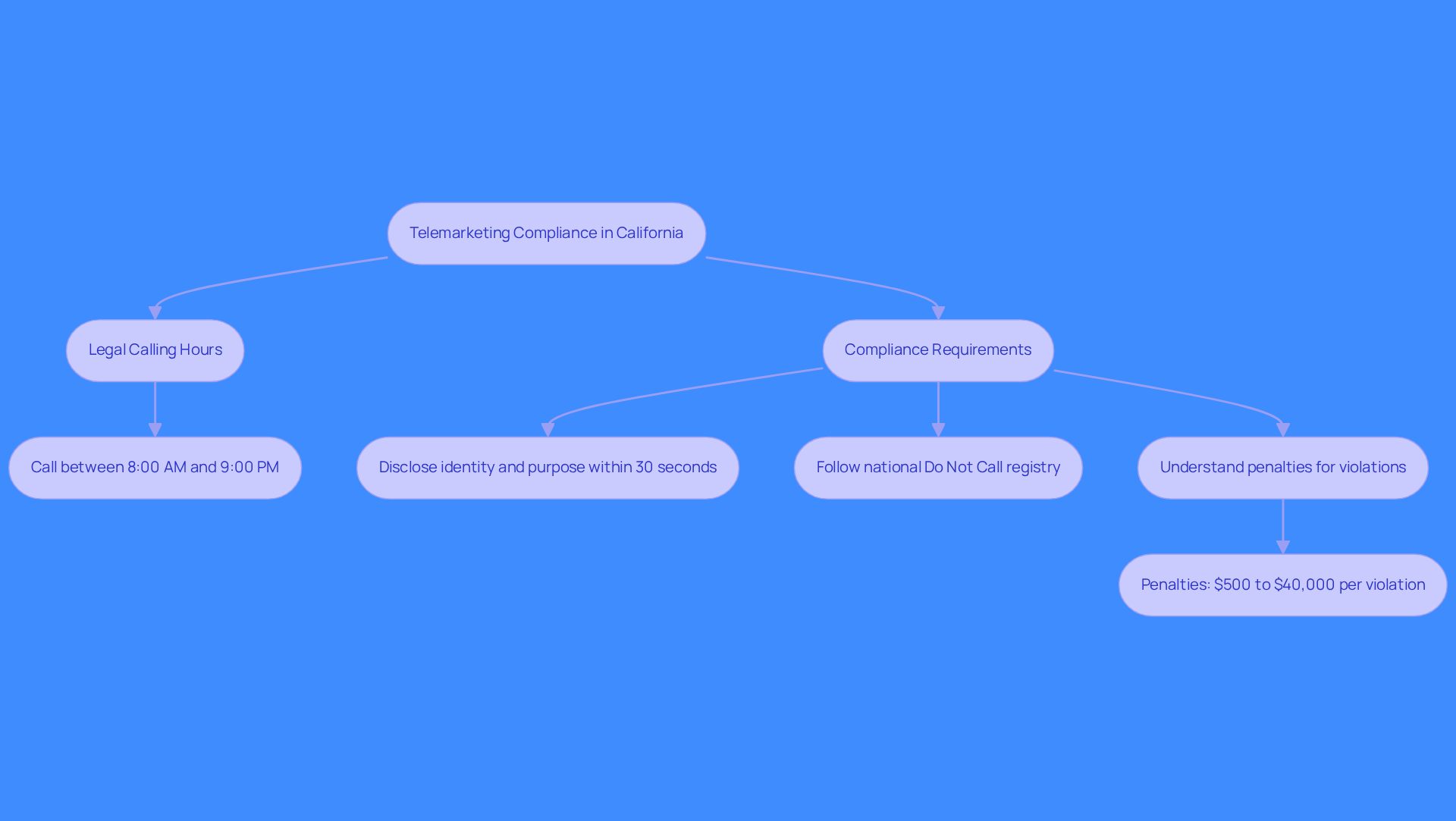
Telemarketers face strict regulations in California that can lead to hefty fines if not followed. In California, the law specifies what is the legal time to call customers, allowing telemarketers to call only between 8:00 AM and 9:00 PM local time. These hours protect consumers from disruptive calls. Non-compliance leads to fines between $500 and $40,000 per violation under California's telemarketing laws. The FTC enforces similar regulations, ensuring compliance at both state and federal levels.
Telemarketers must disclose their identity and call purpose within 30 seconds to protect consumer rights. Failure to comply can result in legal action, as California enforces these rules under the Telemarketing Sales Rule. California does not have its own Do Not Call list; businesses must follow the national DNC registry and honor registrations within 31 days. Violations can lead to lawsuits under California's unfair competition laws, with penalties up to $2,500 per violation.
To minimize risk, telemarketers should:
- Schedule calls within legal hours.
- Understand what is the legal time to call customers in California.
- Comply with state and federal laws.
Contextualize Regulations: TCPA and TSR Overview
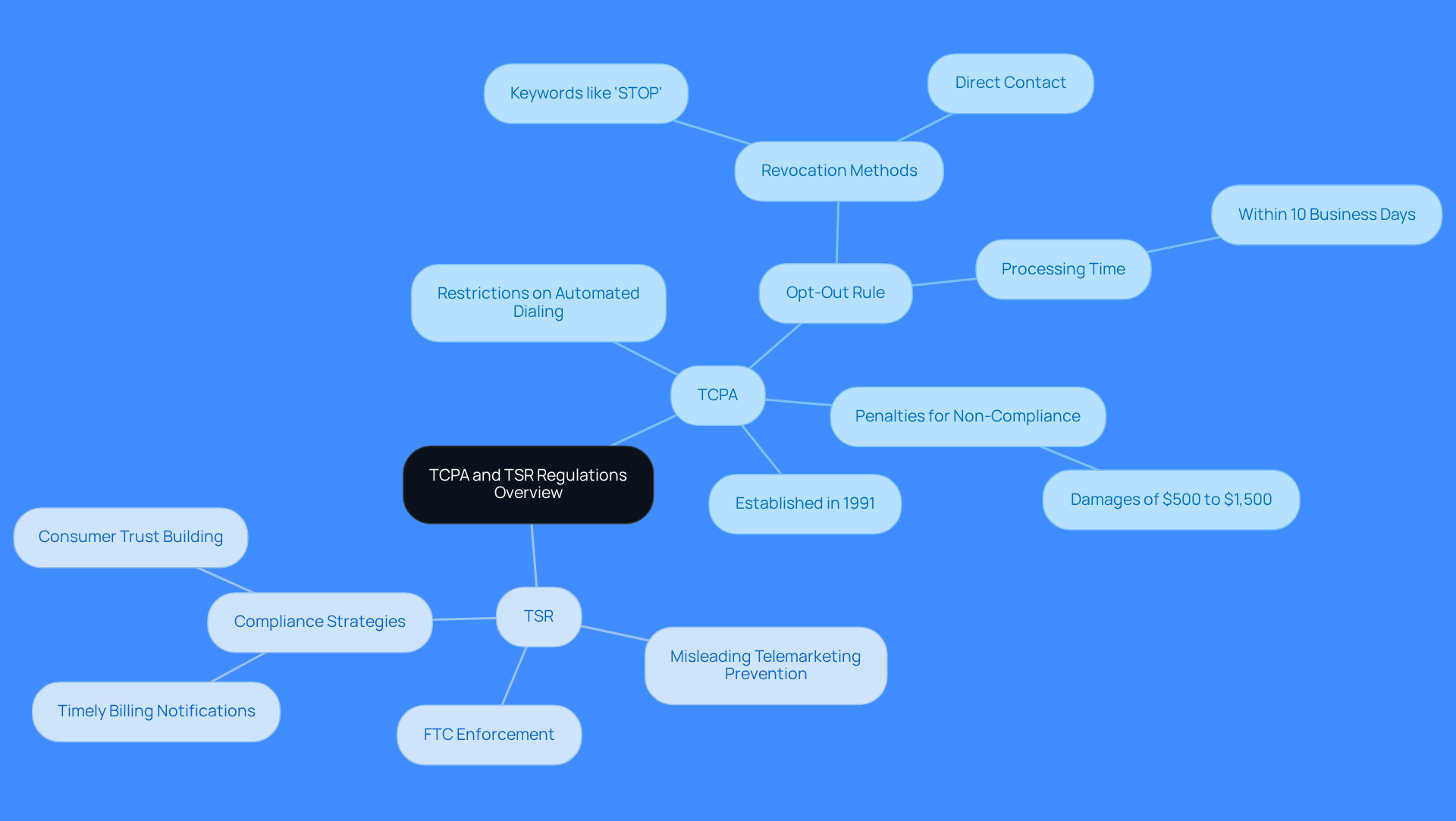
The TCPA and TSR regulations are reshaping how businesses approach telemarketing, creating both challenges and opportunities. The TCPA, established in 1991, restricts automated dialing and pre-recorded messages to protect individual privacy. The TSR, enforced by the FTC, sets rules to prevent misleading telemarketing. Both rules mandate calls between 8:00 AM and 9:00 PM local time, which is in accordance with what is the legal time to call customers in California to respect their preferences. Updates effective April 11, 2026, clarify compliance requirements.
The Opt-Out Rule allows individuals to revoke consent for marketing communications through various methods, including keywords like 'STOP' or direct contact. Businesses must process revocation requests within ten business days to minimize consumer frustration.
Case studies reveal the consequences of non-compliance with these rules. Businesses that ignore revocation requests face penalties under the TCPA, with damages between $500 and $1,500 per violation. Proactive strategies, like timely billing notifications, boost customer satisfaction and revenue, highlighting the need for effective engagement under the TSR.
Experts stress the need for businesses to adapt their marketing practices to meet these evolving regulations. Compliance lowers legal risks and builds customer trust, essential in a competitive market. Staying updated on TCPA and TSR changes is vital for effective and lawful communication strategies.
Explore the Origin of Calling Regulations
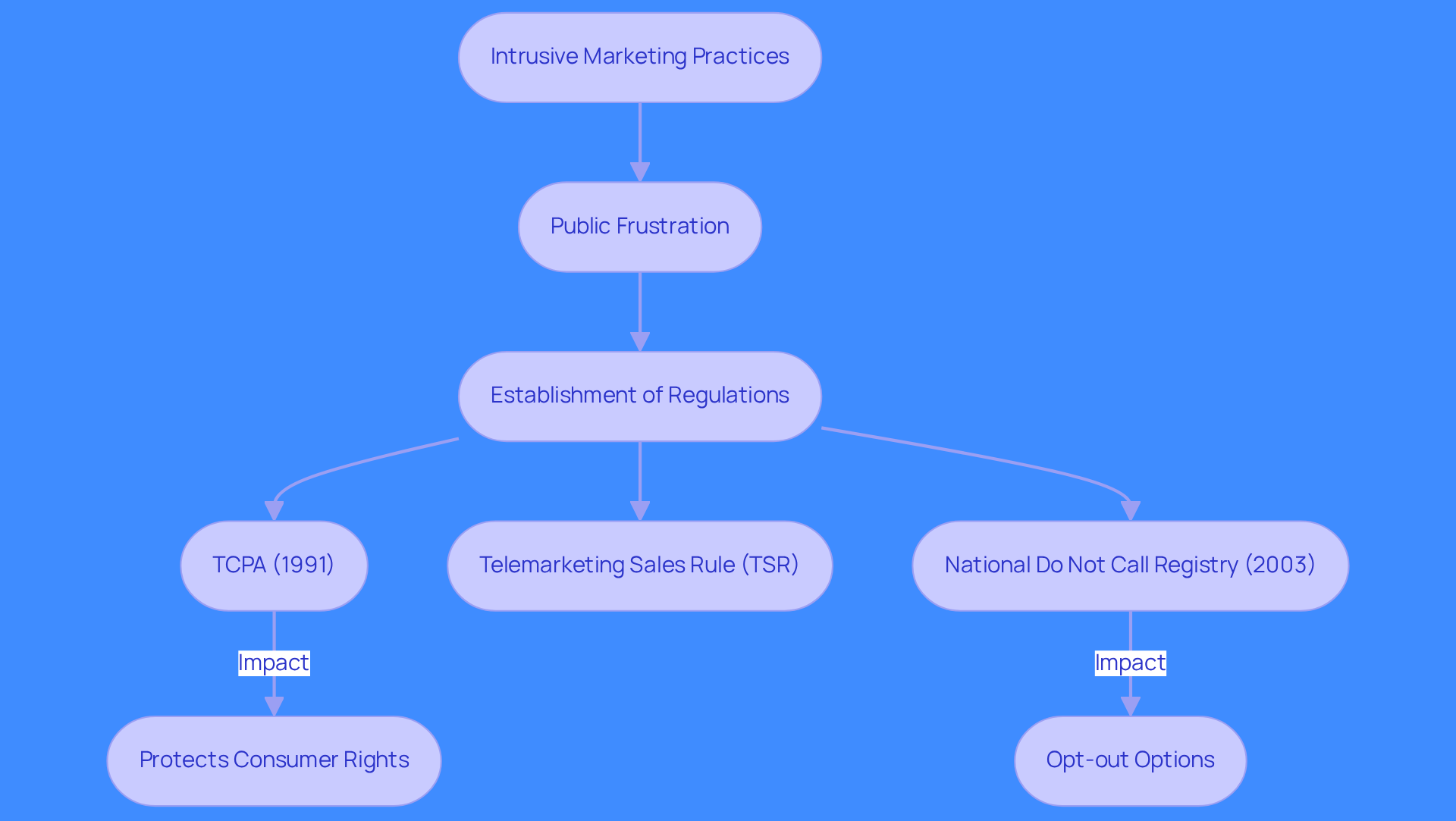
Intrusive marketing practices sparked public frustration, leading to the establishment of regulations that protect consumer rights in telemarketing. In response to public outcry, Congress enacted the TCPA in 1991 to curb abusive marketing practices. This legislation established clear guidelines for telemarketers, protecting individuals from unwanted calls. Subsequent regulations, like the Telemarketing Sales Rule (TSR), further strengthened buyer protections and ethical sales practices. The National Do Not Call Registry, established in 2003, allowed individuals to opt-out of marketing calls, enhancing privacy rights. By September 2015, 222 million numbers were registered, demonstrating the registry's significant impact on privacy rights.
The TCPA landscape is evolving, especially with the rise of robocalls and new dialing technologies, leading to ongoing litigation and regulatory changes. The TCPA is crucial for protecting individuals' rights, addressing privacy concerns, and providing statutory compensation for breaches. Individuals can sue for $500 per infraction and up to $1,500 for intentional violations, underscoring the legal consequences of marketing infringements. The TCPA's non-preemption clause allows states to implement stricter marketing call regulations, enhancing consumer protection. The Supreme Court's ruling in Facebook, Inc. v. Duguid (2021) clarified the definition of autodialers, impacting TCPA claims and the evolution of telemarketing rules.
Identify Key Characteristics of California's Calling Regulations
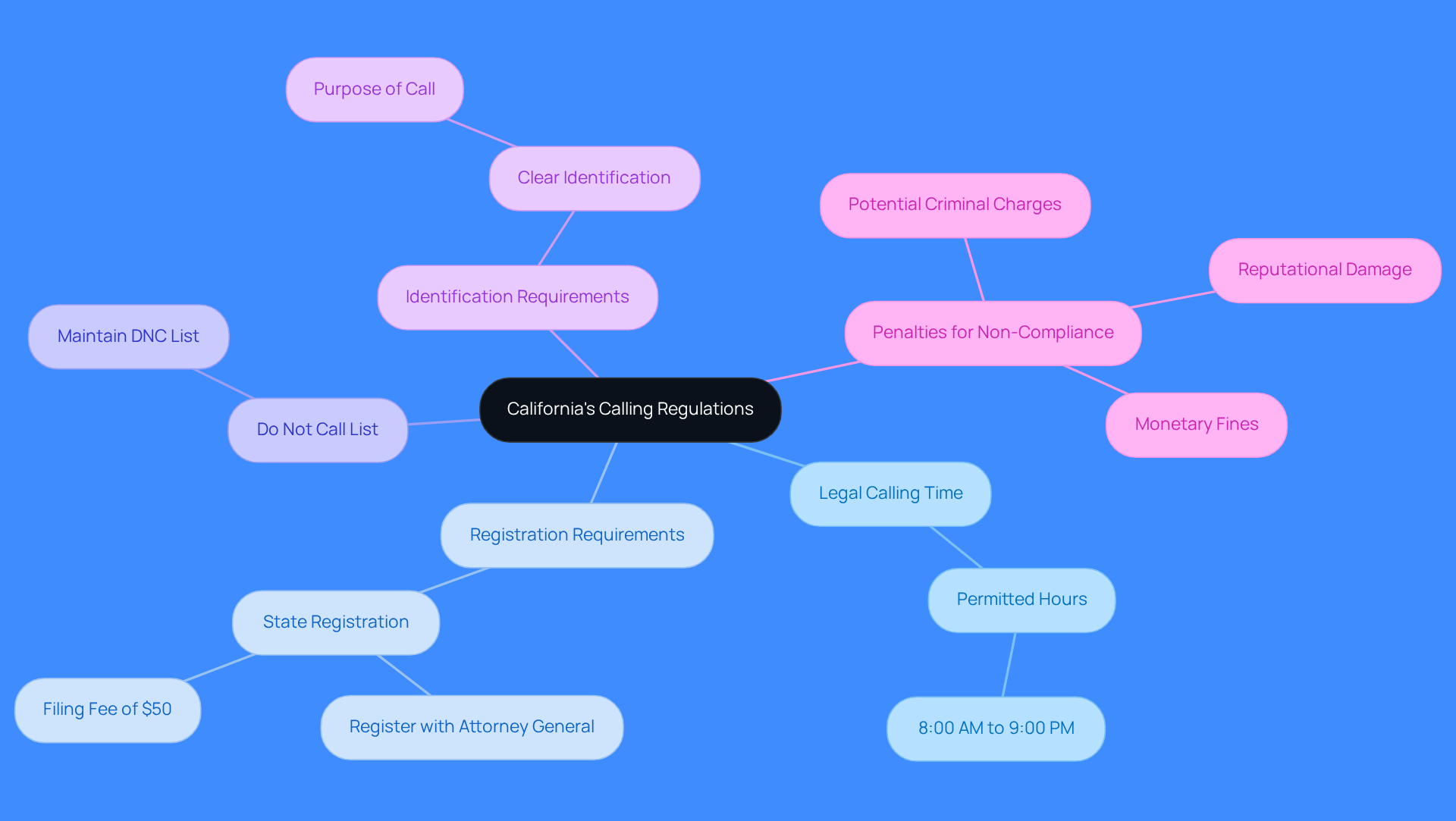
Navigating California's stringent telemarketing laws can be a daunting task for businesses. The guidelines in California outline what is the legal time to call customers in California, which is from 8:00 AM to 9:00 PM local time. Additionally, California requires telemarketers to:
- Register with the state
- Maintain a 'Do Not Call' list
Telemarketers must provide clear identification and the purpose of their calls to ensure transparency. Non-compliance can lead to penalties reaching thousands of dollars. Understanding and adhering to these regulations is crucial to avoid costly penalties that can impact your revenue.
Provide Examples of Compliance in Practice
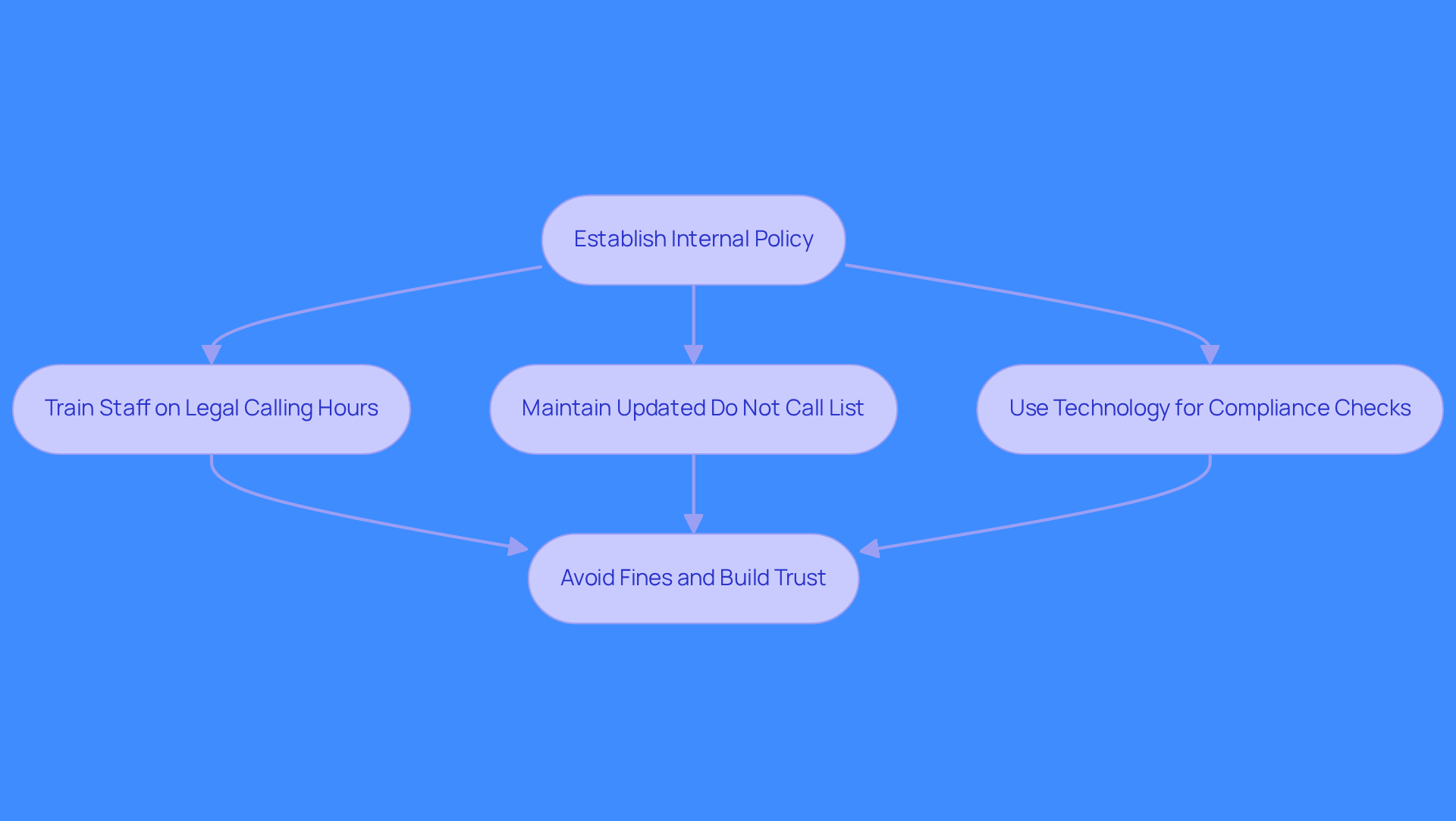
Navigating California's marketing regulations is a critical challenge for telemarketing firms today. A telemarketing company can establish a solid internal policy that trains staff on what is the legal time to call customers in California, which is restricted to between 9 AM and 9 PM, while maintaining an updated 'Do Not Call' list in line with the National Do Not Call Registry. Using technology to automate compliance checks ensures calls happen only during allowed hours, reducing the risk of violations. Firms that follow these regulations avoid fines up to $1,500 and build consumer trust, boosting their market reputation.
Expert insights highlight that organizations applying a single standard across multiple states face heightened risks of non-compliance. As Tony Jarnigan notes, "Companies operating across multiple states face the highest risk when they apply a single standard to all outreach." This emphasizes the need to tailor practices to meet the most stringent state requirements. Successful telemarketing firms exemplify this by implementing structured compliance frameworks that adapt to varying state laws, ensuring consistent and lawful outreach.
Conclusion
Telemarketers risk hefty fines without a clear grasp of California's calling regulations. Following California's calling hours of 8:00 AM to 9:00 PM helps businesses avoid fines and respect consumer time. Compliance protects against legal issues and improves customer interactions. Key points include:
- The need to disclose identity
- The impact of TCPA and TSR regulations
- The history behind these laws
Telemarketers must keep an updated 'Do Not Call' list and conduct compliance checks to avoid penalties and build trust. Staying compliant not only protects your business but also enhances your outreach effectiveness.
Frequently Asked Questions
What are the legal calling hours for telemarketers in California?
Telemarketers in California are allowed to call customers only between 8:00 AM and 9:00 PM local time.
What are the penalties for non-compliance with California's telemarketing laws?
Non-compliance can result in fines ranging from $500 to $40,000 per violation under California's telemarketing laws.
What must telemarketers disclose during a call?
Telemarketers must disclose their identity and the purpose of the call within 30 seconds to protect consumer rights.
Does California have its own Do Not Call list?
No, California does not have its own Do Not Call list; businesses must adhere to the national Do Not Call registry and honor registrations within 31 days.
What are the potential legal consequences for violating telemarketing regulations in California?
Violations can lead to lawsuits under California's unfair competition laws, with penalties of up to $2,500 per violation.
What are the key regulations affecting telemarketing practices?
The key regulations include the Telephone Consumer Protection Act (TCPA) and the Telemarketing Sales Rule (TSR), which restrict automated dialing and pre-recorded messages to protect individual privacy and prevent misleading telemarketing.
What is the Opt-Out Rule in telemarketing?
The Opt-Out Rule allows individuals to revoke consent for marketing communications through various methods, such as keywords like 'STOP' or direct contact, and businesses must process these requests within ten business days.
What are the consequences of ignoring revocation requests under the TCPA?
Businesses that ignore revocation requests can face penalties under the TCPA, with damages ranging from $500 to $1,500 per violation.
Why is compliance with TCPA and TSR important for businesses?
Compliance lowers legal risks, builds customer trust, and is essential for effective communication strategies in a competitive market. Staying updated on changes to these regulations is vital for lawful marketing practices.
List of Sources
- Define Legal Calling Hours in California
- Telemarketing Calling Restrictions & Hours by State (https://blog.clickpointsoftware.com/telemarketing-calling-hours-by-state)
- California telemarketing rules: what every outbound team must know (https://leadcompliant.com/articles/state-laws/california-telemarketing-rules)
- Telemarketing Calling Hours by State for 2026 (https://kixie.com/sales-blog/telemarketing-laws-by-state-2026)
- Attorney General Lockyer Files Lawsuit Against Telemarketer for Violating "Do Not Call" Laws (https://oag.ca.gov/news/press-releases/attorney-general-lockyer-files-lawsuit-against-telemarketer-violating-do-not)
- Contextualize Regulations: TCPA and TSR Overview
- TCPA revocation rules affecting utilities by 2026 (https://goconvey.com/tcpa-regulations-affecting-utilities-by-2026)
- Telephone and Texting Compliance News — April 2026 (https://mintz.com/insights-center/viewpoints/2776/2026-04-15-telephone-and-texting-compliance-news-april-2026)
- The TCPA’s New Opt-Out Rules Take Effect on April 11, 2025 – What Does This Mean for Businesses? (https://bclplaw.com/en-US/events-insights-news/the-tcpas-new-opt-out-rules-take-effect-on-april-11-2025-what-does-this-mean-for-businesses.html)
- Changes to the Telemarketing Sales Rule (TSR): What You Need to Know - The PMA (https://thepma.org/changes-to-the-telemarketing-sales-rule-tsr-what-you-need-to-know)
- FCC Proposes Major Changes to Robocall Rules (https://bhfs.com/insight/fcc-proposes-major-changes-to-robocall-rules)
- Explore the Origin of Calling Regulations
- The History of the Telephone Consumer Protection Act (TCPA) - Consumer Attorneys (https://ginsburglawgroup.com/2026/02/the-history-of-the-telephone-consumer-protection-act-tcpa)
- Do Not Call: The History of Do Not Call and How Telemarketing Has Evolved - National Association of Attorneys General (https://naag.org/attorney-general-journal/do-not-call-the-history-of-do-not-call-and-how-telemarketing-has-evolved)
- What You Need to Know About the Telephone Consumer Protection Act - ILR (https://instituteforlegalreform.com/what-you-need-to-know-about-the-telephone-consumer-protection-act)
- Telemarketing in 2024 – A Mid-Year Review (https://kelleydrye.com/viewpoints/blogs/ad-law-access/telemarketing-in-2024-a-mid-year-review)
- After FCC Abandons Popular Telemarketing Rule, Consumers Take Action to Save It (https://nclc.org/after-fcc-abandons-popular-telemarketing-rule-consumers-take-action-to-save-it)
- Identify Key Characteristics of California's Calling Regulations
- Call center laws and regulations in 2026 - ActiveProspect (https://activeprospect.com/blog/call-center-regulations)
- Telemarketing Compliance Statistics Legal Guide (https://jeremyeveland.com/telemarketing-compliance-statistics)
- California Do-Not-Call Registry Is Merging with the Federal List | Privacy Rights Clearinghouse (https://privacyrights.org/resources-tools/archives/california-do-not-call-registry-merging-federal-list)
- Telemarketing Calling Hours by State for 2026 (https://kixie.com/sales-blog/telemarketing-laws-by-state-2026)
- Telephonic Seller Registration (https://oag.ca.gov/consumers/general/telreg)
- Provide Examples of Compliance in Practice
- Telephone and Texting Compliance News — April 2026 (https://mintz.com/insights-center/viewpoints/2776/2026-04-15-telephone-and-texting-compliance-news-april-2026)
- California Telemarketing Fraud Laws - FindLaw (https://findlaw.com/state/california-law/california-telemarketing-fraud-laws.html)
- Comparing state telemarketing laws: key differences | Wipfli (https://wipfli.com/insights/articles/state-telemarketing-laws-where-rules-diverge-and-risk-increases)
- 2026 Guide to TCPA, One-to-One Consent, CAN-SPAM & State Regulations (https://blog.clickpointsoftware.com/tcpa-one-to-one-consent-can-spam-state-regulations)
- FTC Announces Amendments to Telemarketing Sales Rule (https://consumerfinancialserviceslawmonitor.com/2024/03/ftc-announces-amendments-to-telemarketing-sales-rule)